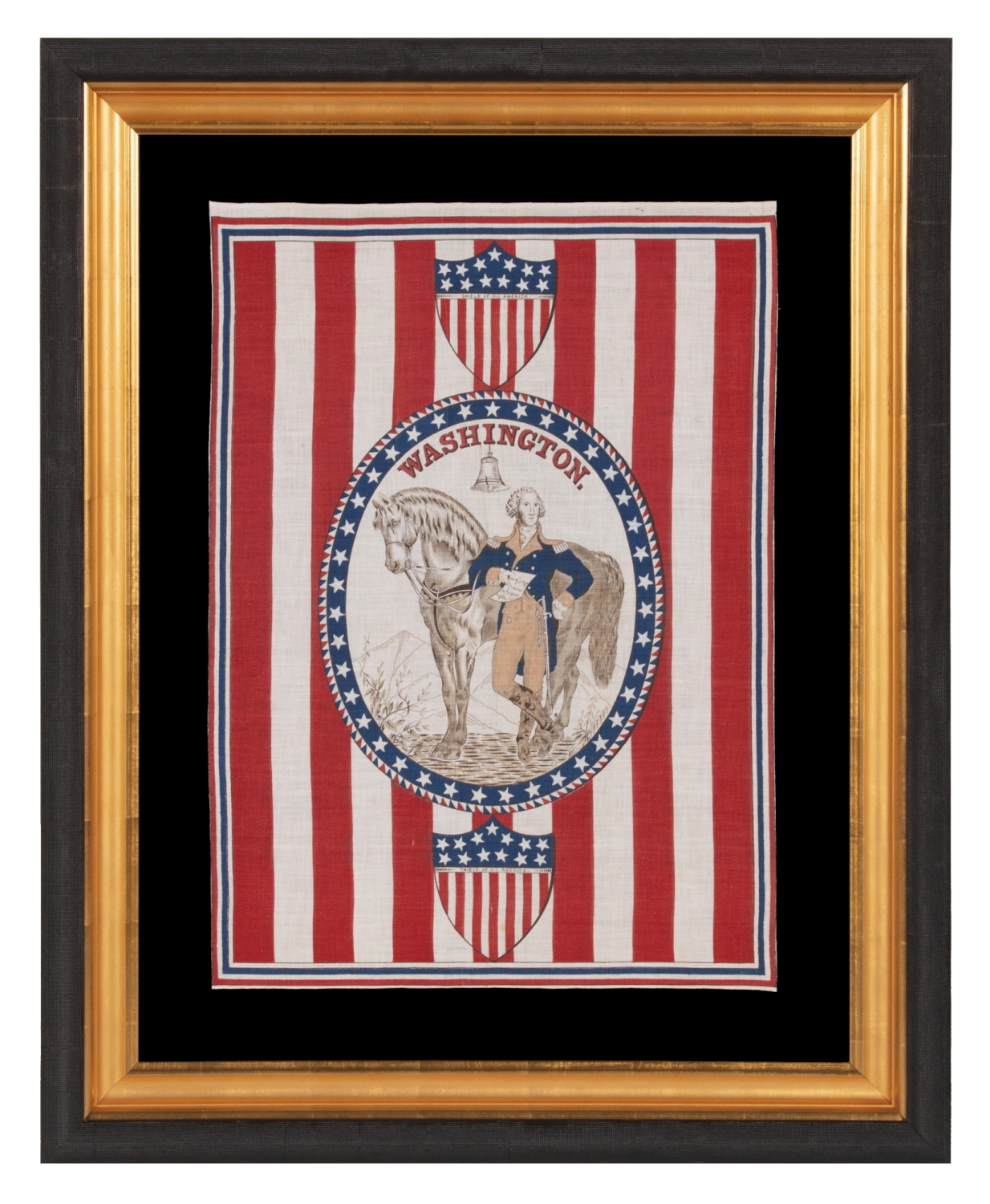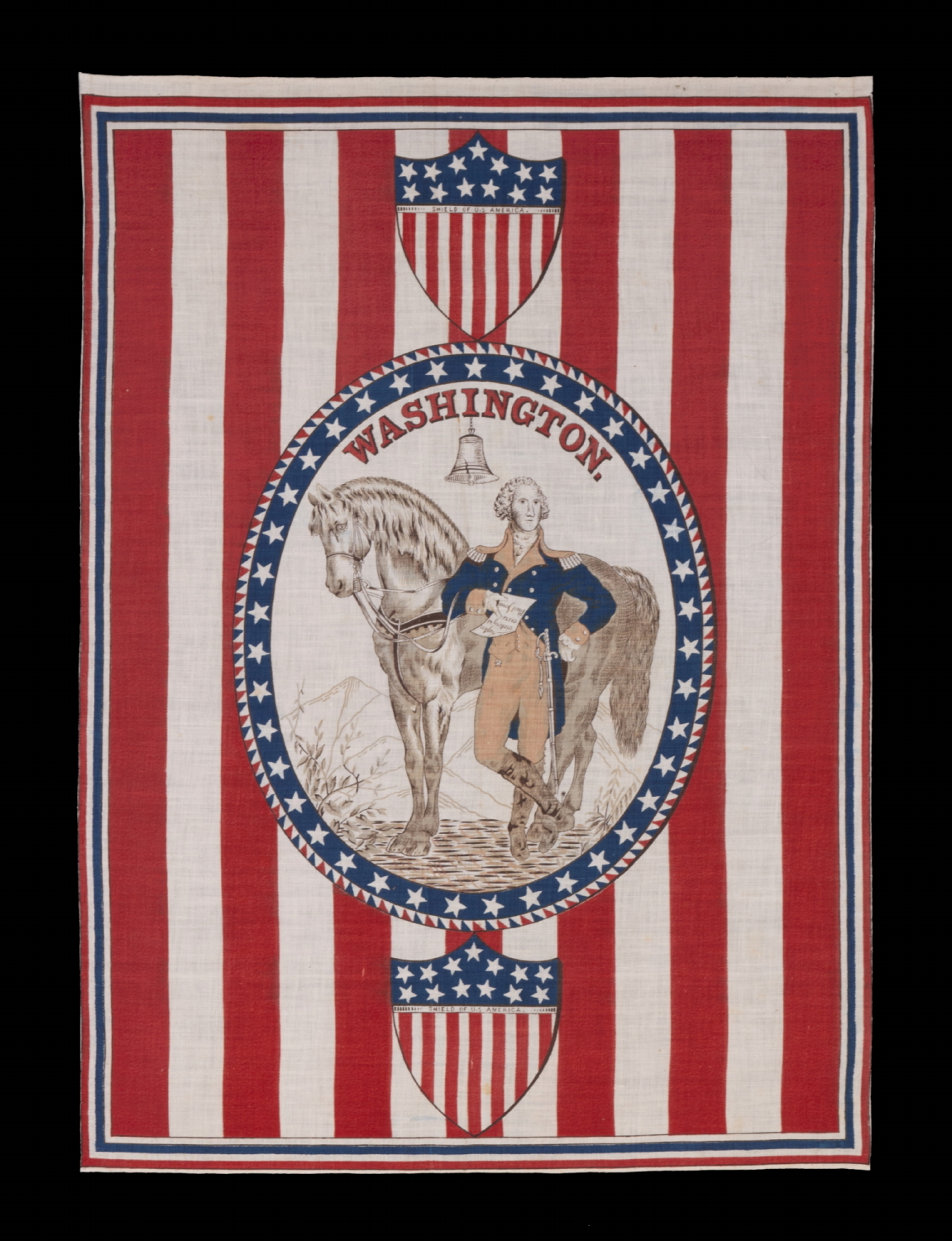
| ANTIQUE AMERICAN PARADE FLAG / BANNER WITH A STANDING PORTRAIT OF GEORGE WASHINGTON & HIS HORSE, “BLUESKIN,” SET WITHIN AN OVAL WINDOW, ON A GROUND OF RED & WHITE STRIPES, MADE FOR THE 1876 CENTENNIAL OF AMERICAN INDEPENDENCE BY S.H. GREENE & SONS OF WARWICK, RHODE ISLAND |
|
| Web ID: | pat-839 |
| Available: | In Stock |
| Frame Size (H x L): | Approx. 35.5" x 28" |
| Flag Size (H x L): | 24.5" x 17.5" |
| Description: | |
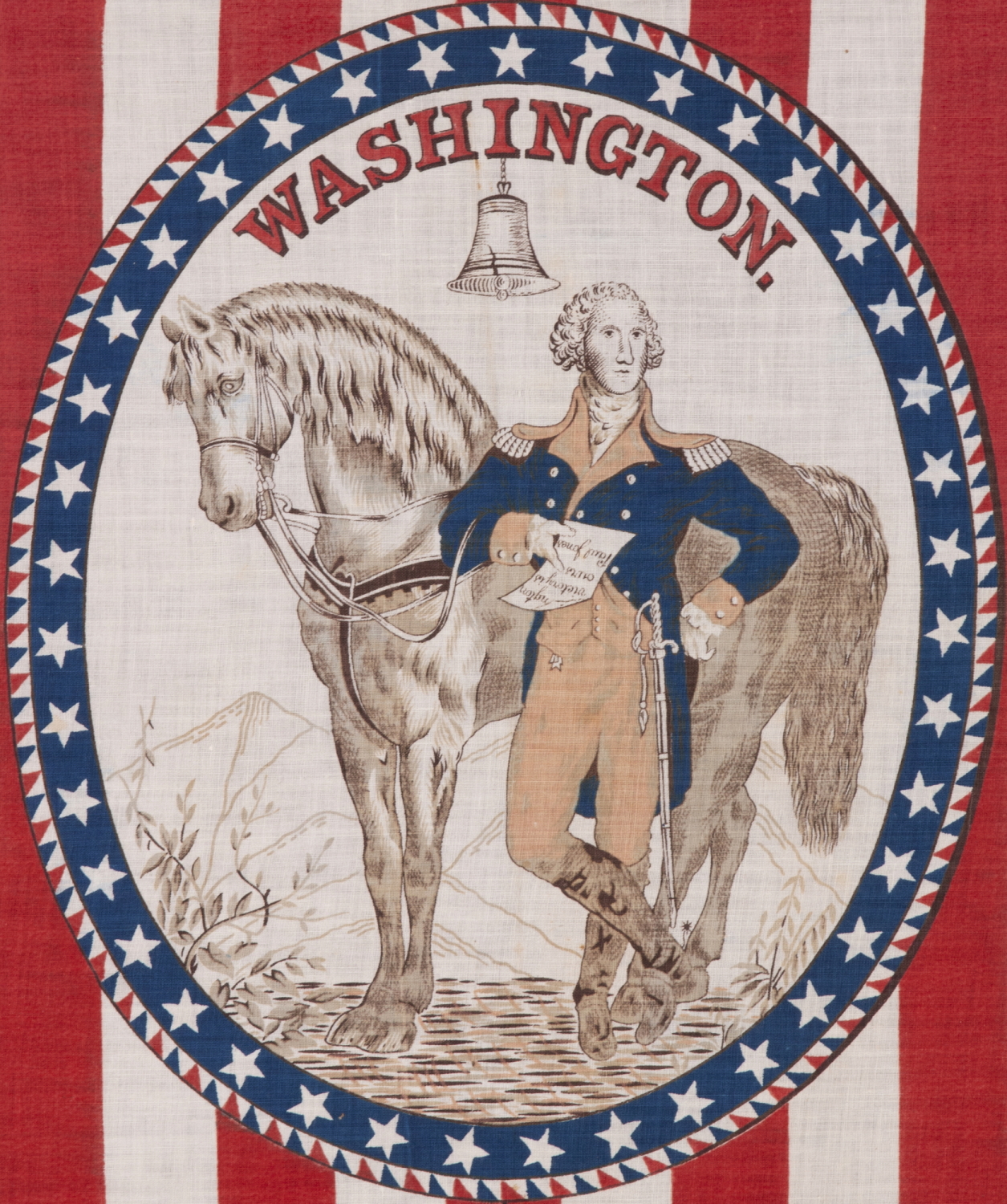
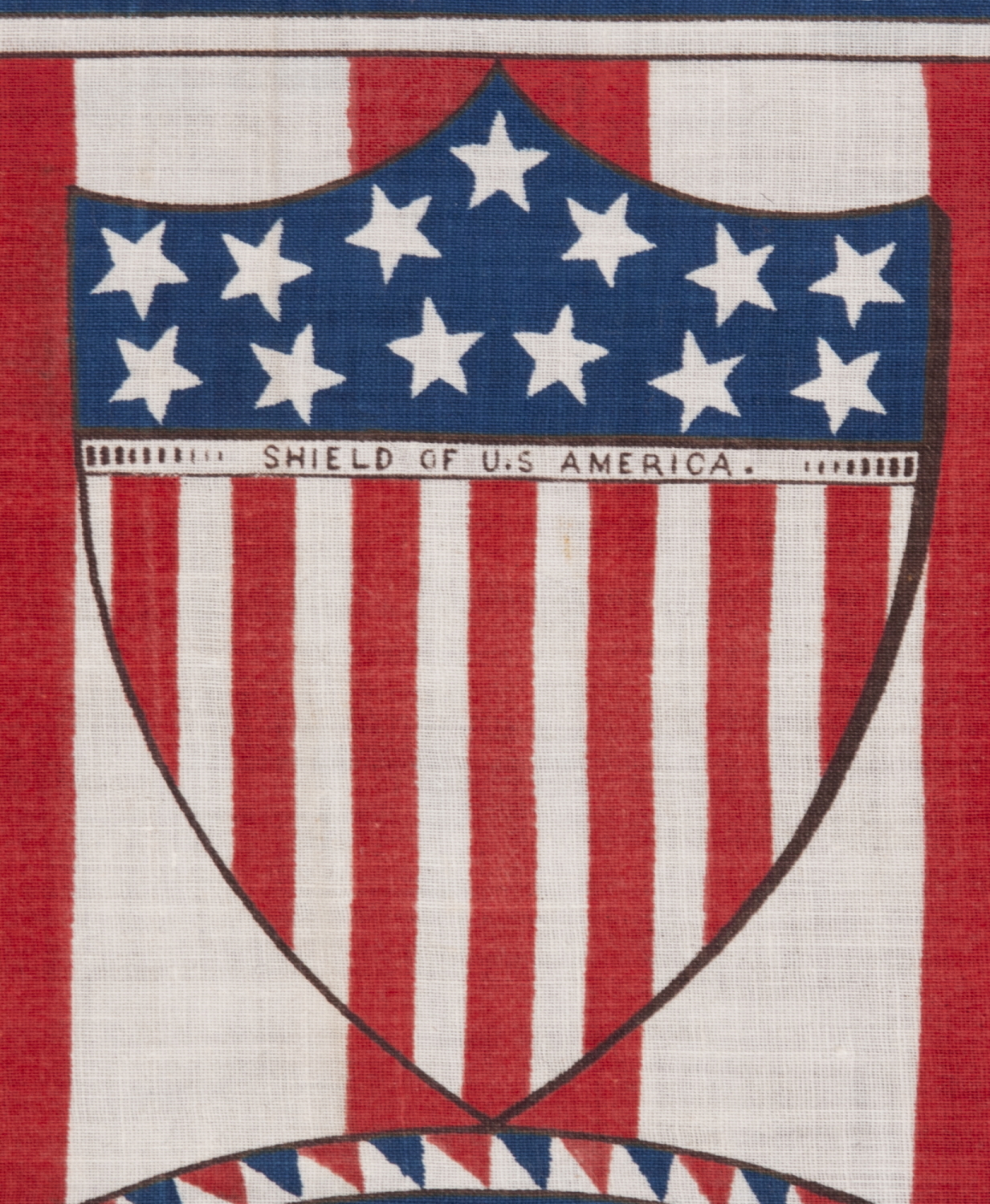
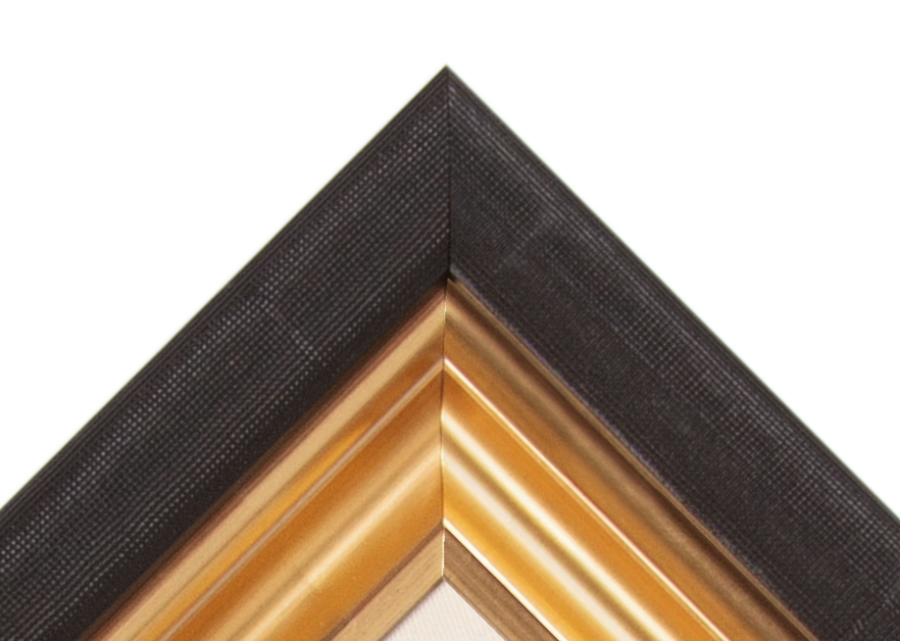
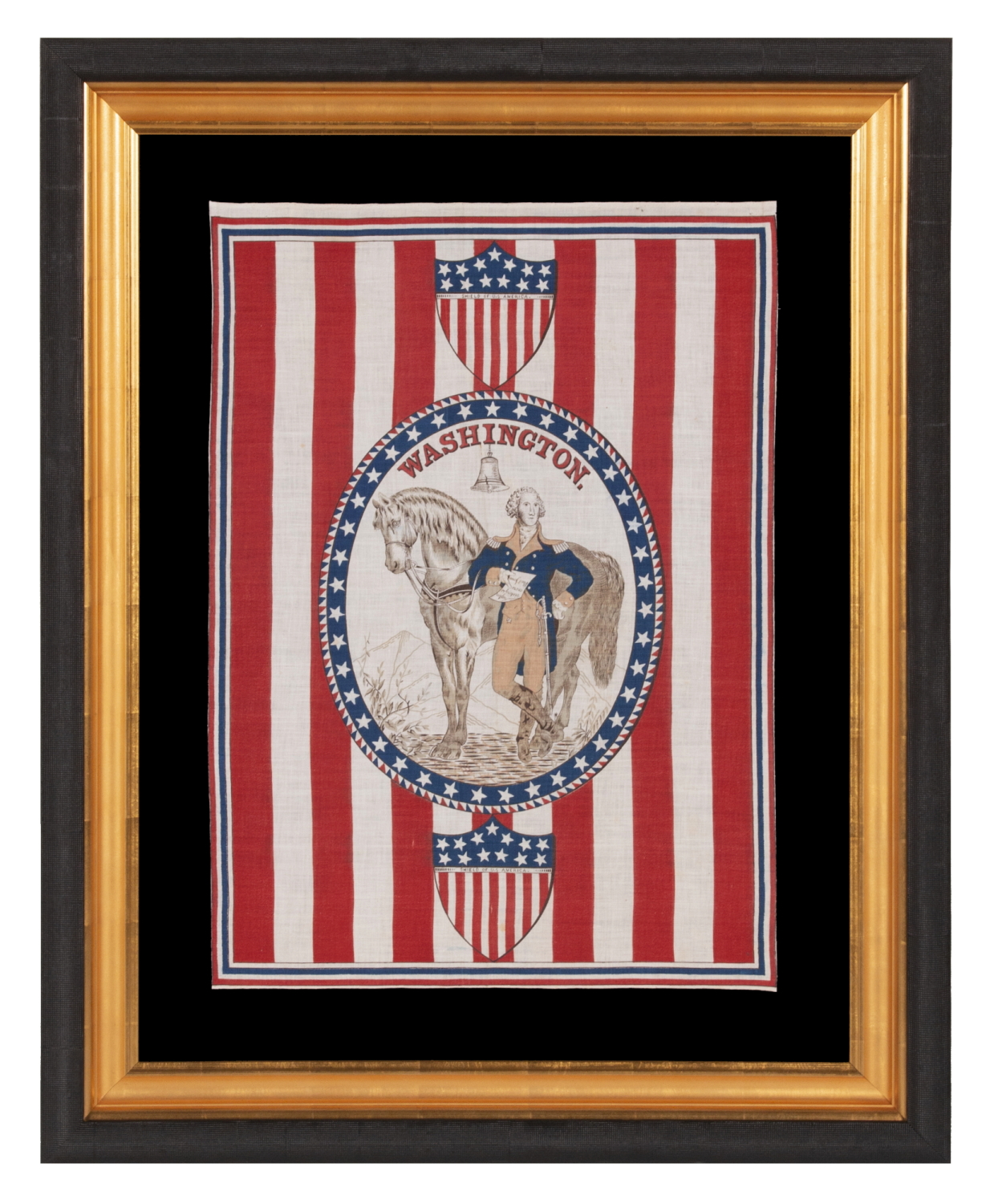
| Patriotic American parade flag / banner, printed on plain weave cotton. Made to celebrate the 100th anniversary of American independence, in 1876, the graphics feature an oval window, with a portrait of George Washington and his horse, set against a field of 13 red & white stripes. In spite of its vertical orientation, this striking example was intended to be tacked to a wooden staff along what may appear to be its top edge, to be waved as if it were a traditional, horizontal, Stars & Stripes parade flag. With strong colors and endearing folk quality, the image of Washington is a take on the view painted by the artist John Trumbull, depicting his likeness before the battle of Trenton. The variant pose of Washington depicts his head turned left, and his right arm bent inwards, grasping the a letter that reads: “Washington; Victory is Ours; Paul Jones” The pose differs significantly from that of Trumbull, who instead illustrates him facing right, with his right arm outstretched, gripping a spyglass. The image is, in fact, a logo designed by S.H. Greene & Sons of Warwick, Rhode Island, a prominent firm that made flags, patriotic, and political textiles. The inclusion of Washington’s horse is of notable interest. This is “Blueskin,” one of two that most often accompanied him throughout the war, the other being “Nelson”. Above the general hangs the cracked Liberty Bell. All of this is framed within an oval window, framed by 39 white stars on a blue band, inside a red & blue sawtooth border. Above and below the center medallion are federal shields with 13 stars, on the waists of which are the words: “Shield of U.S. America”. I acquired a partial bolt of 39 star parade flags, made of the same fabric, printed with the same hues of red and blue. Glued to what must have been the first flag on the bolt was an original paper maker’s label that featured an engraved version of the same Washington image, beneath which was the S.H. Greene & Sons name. This denoted a specific line of patriotic cotton fabrics produced by Greene. The firm was founded in 1828 by Simon H. Greene, son of the famous Rhode Island legislator and Revolutionary War officer, Christopher Greene (1737-1781), who led the spirited defense of Fort Mercer at the 1777 Battle of Red Bank, then led the 1st Rhode Island Regiment--the first and only "black battalion" of the war, comprised largely of African American and Native American soldiers. Col. Greene fought with distinction at the 1778 Battle of Rhode Island, and was killed in 1781 at the Battle of Pine's Bridge. The firm's "Washington" line of printed fabrics, denoted on the label, became nationally known. At the opening of the year 1876 there were 37 states and an official count of 37 stars. Though Colorado joined the Union as the 38th state on August 1st of that year, some flag-makers thought that the Dakota Territory was likewise soon-to-be added, as a single state. Those that supported this notion added a 39th star, in hopeful anticipation of its arrival. While the Dakotas would not join for another 13 years, numerous flags and patriotic objects, produced for our nation’s 100th birthday, featured various representations of 39 stars. This particular George Washington parade flag banner, produced by S.H. Greene, is one of the most beautiful and graphic, printed centennial parade flag textiles of this nature. It is of significant interest to note that examples of both it, and the 39 star parade flag variety that I spoke of with the Greene label, can be encountered stitched into quilts made for the centennial celebration, pieced alongside other identifiable banners, kerchiefs, parade flags, and centennial fabrics. It is also if interest to note that the same design was employed by S.H. Greene as a template for flags used in the 1880 presidential election, created for both the successful campaign of Republican Candidate James Garfield, and that of his Democrat opponent, Winfield Scott Hancock. In each case, bust portraits of the men were substituted for the Washington & Blueskin logo. An example of the Washington version of this flag resides in the collection of the Smithsonian Institution’s Division of Political History, documented as item 376 in “Threads of History, Americana Recorded on Cloth, 1775 - the Present” by Herbert Ridgeway Collins (1979, Smithsonian Press), p. 188. Collins formerly served as the Smithsonian’s curator of Political History. His book is considered the Bible of political flags, kerchiefs, and related textiles. A concise history of S.H. Greene & Sons was compiled by the Rhode Island Historical Society: “S.H. Greene & Sons was founded in 1828 as the “Clyde Bleachery and Print Works,” by Simon H. Greene (1799-1885) and his partner Edward Pike. Specializing in the bleaching and printing of cotton fabric, the mill was built on land previously owned by Simon’s famous grandfather, in West Warwick, and became one of the preeminent textile print works in New England. After the 1842 death of Edward Pike, Greene bought the full partnership rights from his heirs, , and Greene's sons became more involved with the mill's operation. Formally changing its name to S.H. Greene & Sons in 1865, Henry L. Greene (1825-1885), Edward A. Greene (1823-1892) and John W.A. Greene (1832-1873) became active partners with their father. The company's "Washington" line of prints became nationally known. In 1892, Henry's son, Francis W. Greene, (1861-1940) joined the firm, which incorporated in 1899, with Henry as president and Francis as treasurer. By 1908, S.H. Greene & Sons was bleaching 1,500,000 yards of cloth per week and printing 1,250,000 yards. The company's "Washington" line of printed cloth became nationally known. Francis W. Greene's son, Francis V. Greene (1899-1977), became involved with the business in the 1920’s. The company remained in operation through 1925, when it was placed in receivership. Its assets were sold at public auction in October of 1926, ending four generations and nearly a century of Greene family ownership. The neighborhood of the mill, now in West Warwick, is still known as ‘Clyde’.” (source: http://www.rihs.org/mssinv/Mss953.htm). Provenance: Exhibited in the office of United States Secretary of Health Robert F. Kennedy, Jr. in the Hubert Humphrey Building, Washington, DC, from June 12th, 2026 – present, as part of an ongoing free loan exhibition to the U.S. Dept. of Health from Jeff R. Bridgman Antiques, Inc. Mounting: The flag was mounted and framed within our own conservation department, led by expert staff. We take great care in the mounting and preservation of flags and have framed thousands of examples. The exceptional, gilded molding has an early American profile. To this a black-painted, shadowbox molding, with a bowed profile and a textured surface, was added as a cap. The background is 100% cotton twill, black in color, which has been washed and treated for colorfastness. The glazing is U.V. protective acrylic (Plexiglas). Condition: Absolutely exceptional among known examples. There are tack holes along the hoist (top) edge, where the flag was once affixed to its original wooden staff, and there is extremely minor foxing and staining, almost not worth mention. |
|
| Video: | |
| Collector Level: | Advanced Collectors and the Person with Everything |
| Flag Type: | Parade flag |
| Star Count: | 39 |
| Earliest Date of Origin: | 1876 |
| Latest Date of Origin: | 1876 |
| State/Affiliation: | Rhode Island |
| War Association: | |
| Price: | Please call (717) 676-0545 or (717) 502-1281 |
| E-mail: | info@jeffbridgman.com |
 |
|