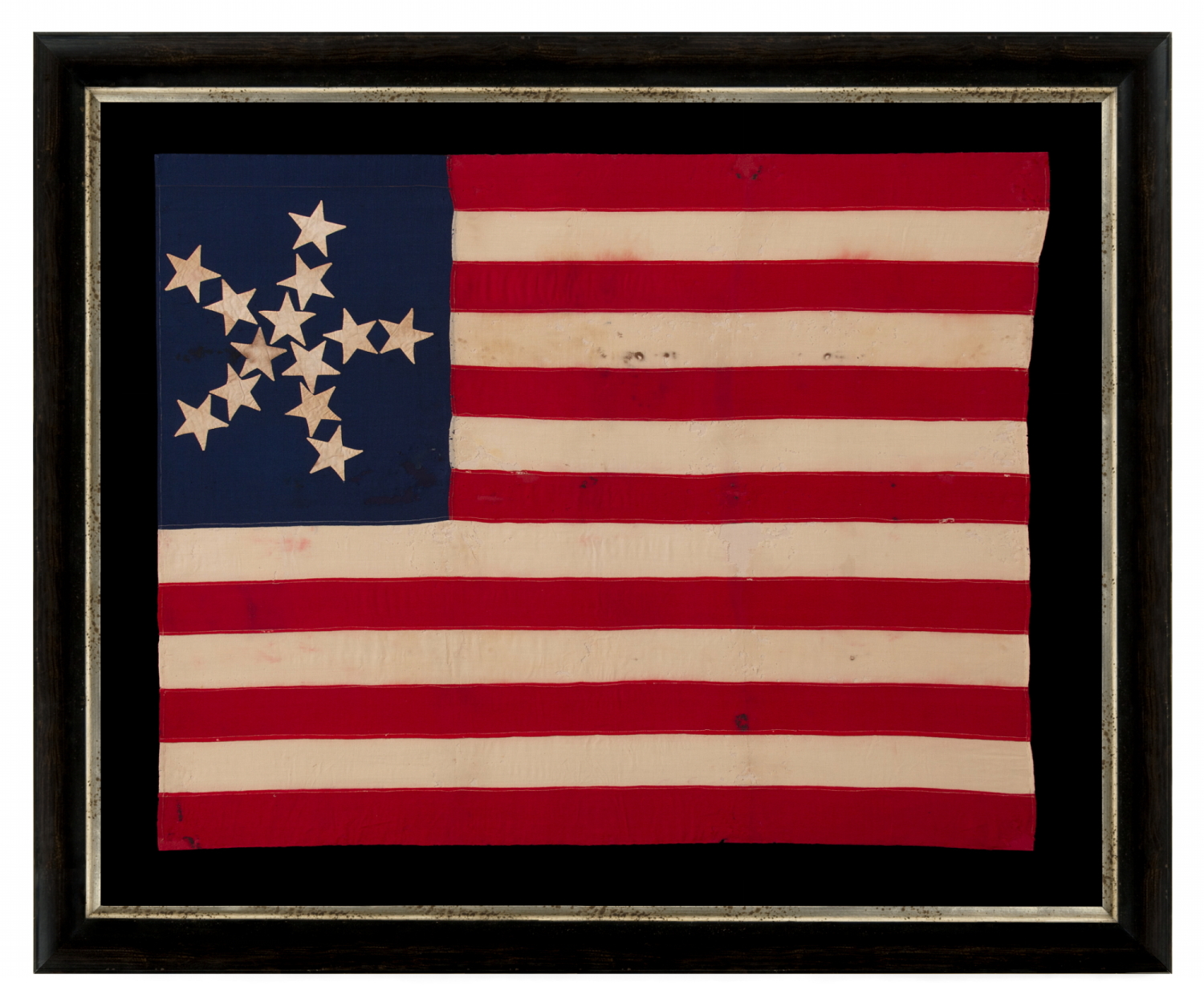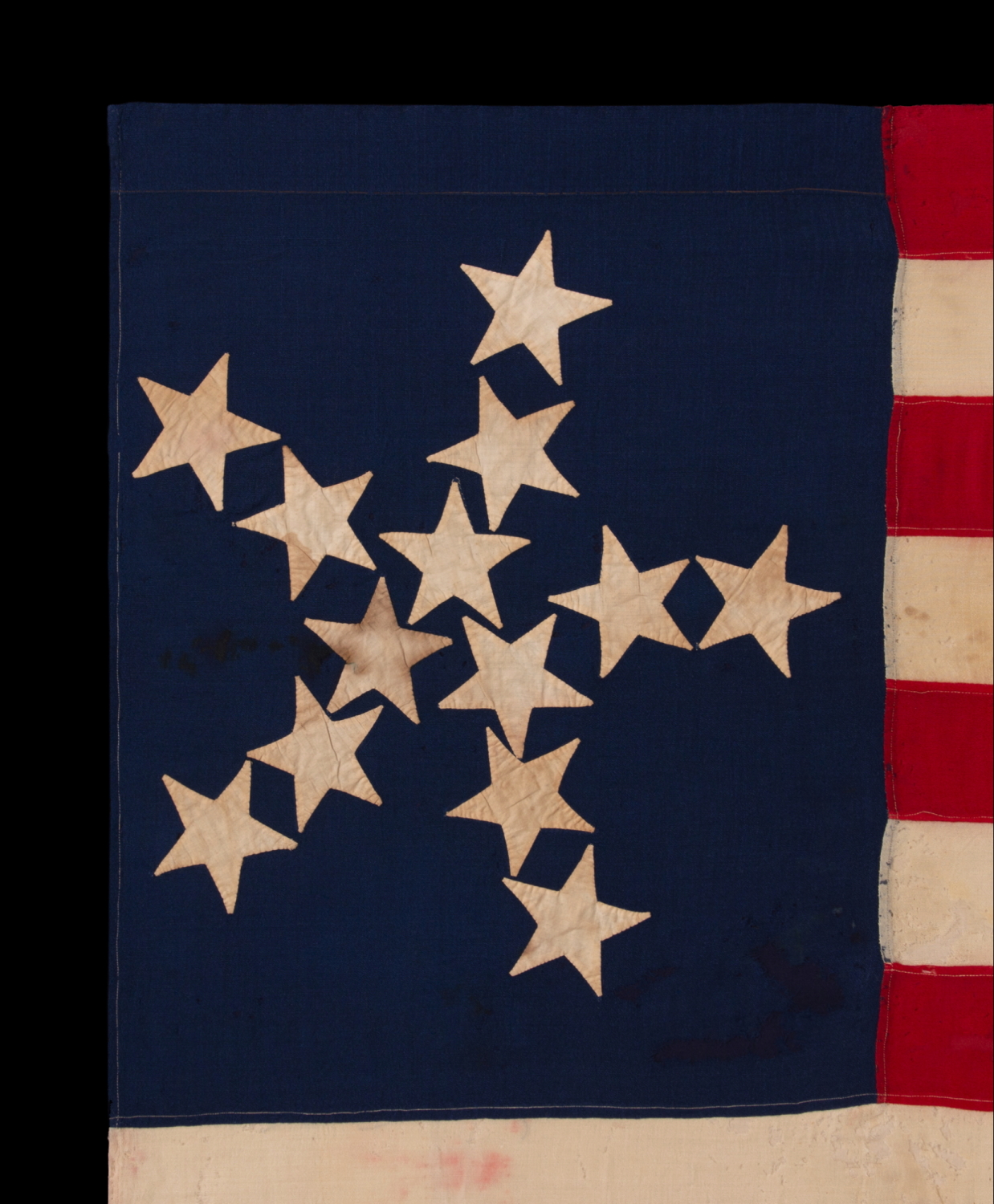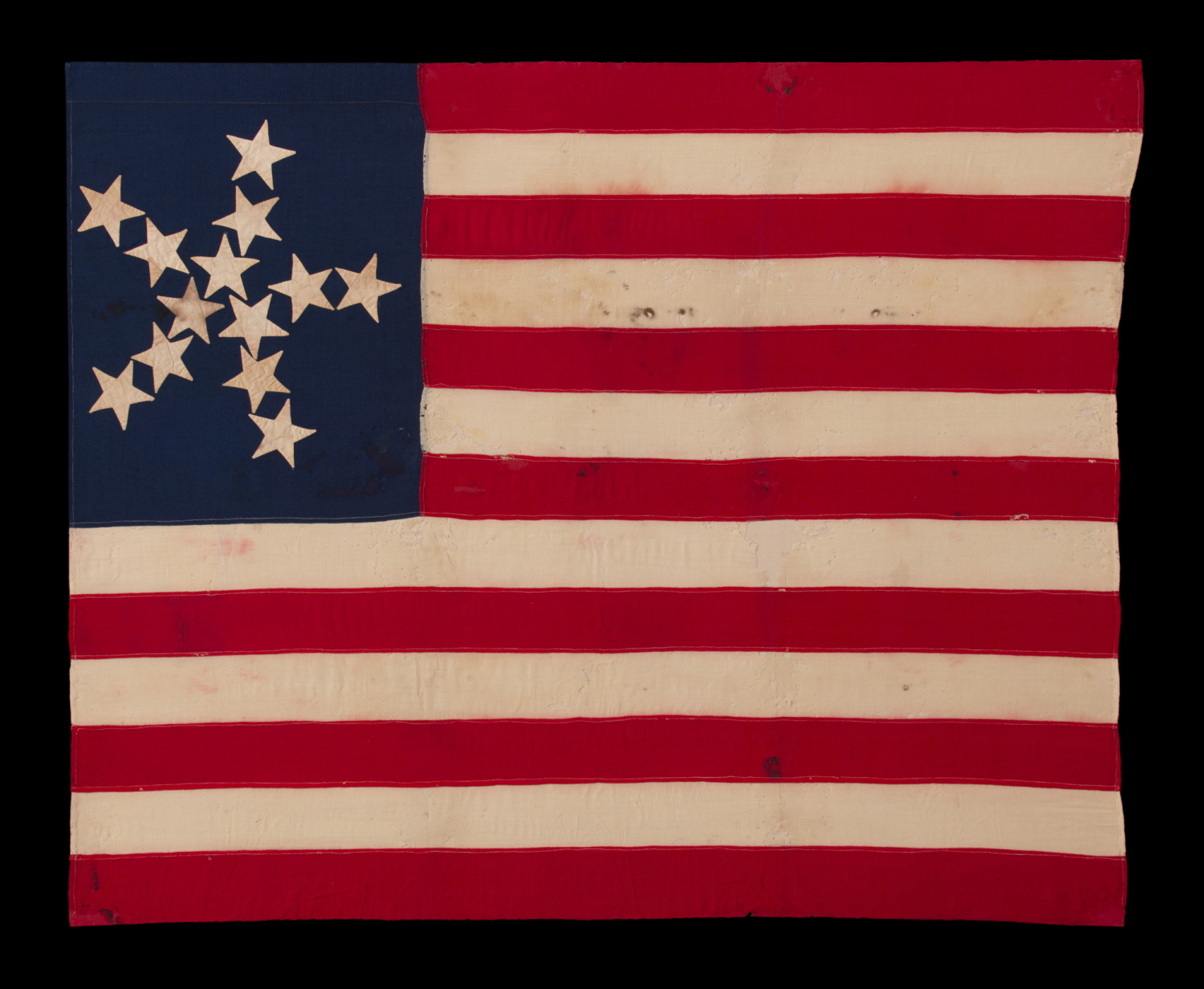
| ANTIQUE AMERICAN FLAG OF THE CIVIL WAR ERA, WITH 13 STARS IN A SPECTACULAR PINWHEEL STYLE “GREAT STAR”; A MASTERPIECE OF EARLY AMERICAN FLAG-MAKING, ONE OF JUST TWO KNOWN EXAMPLES WITH A VARIANT OF THIS DYNAMIC CONFIGURATION, AND ONE OF THE BEST OF ALL KNOWN 13 STAR FLAGS OF ANY PERIOD |
|
| Web ID: | 13j-1740 |
| Available: | In Stock |
| Frame Size (H x L): | Approx. 46.5" x 55" |
| Flag Size (H x L): | 33.5" x 42" |
| Description: | |
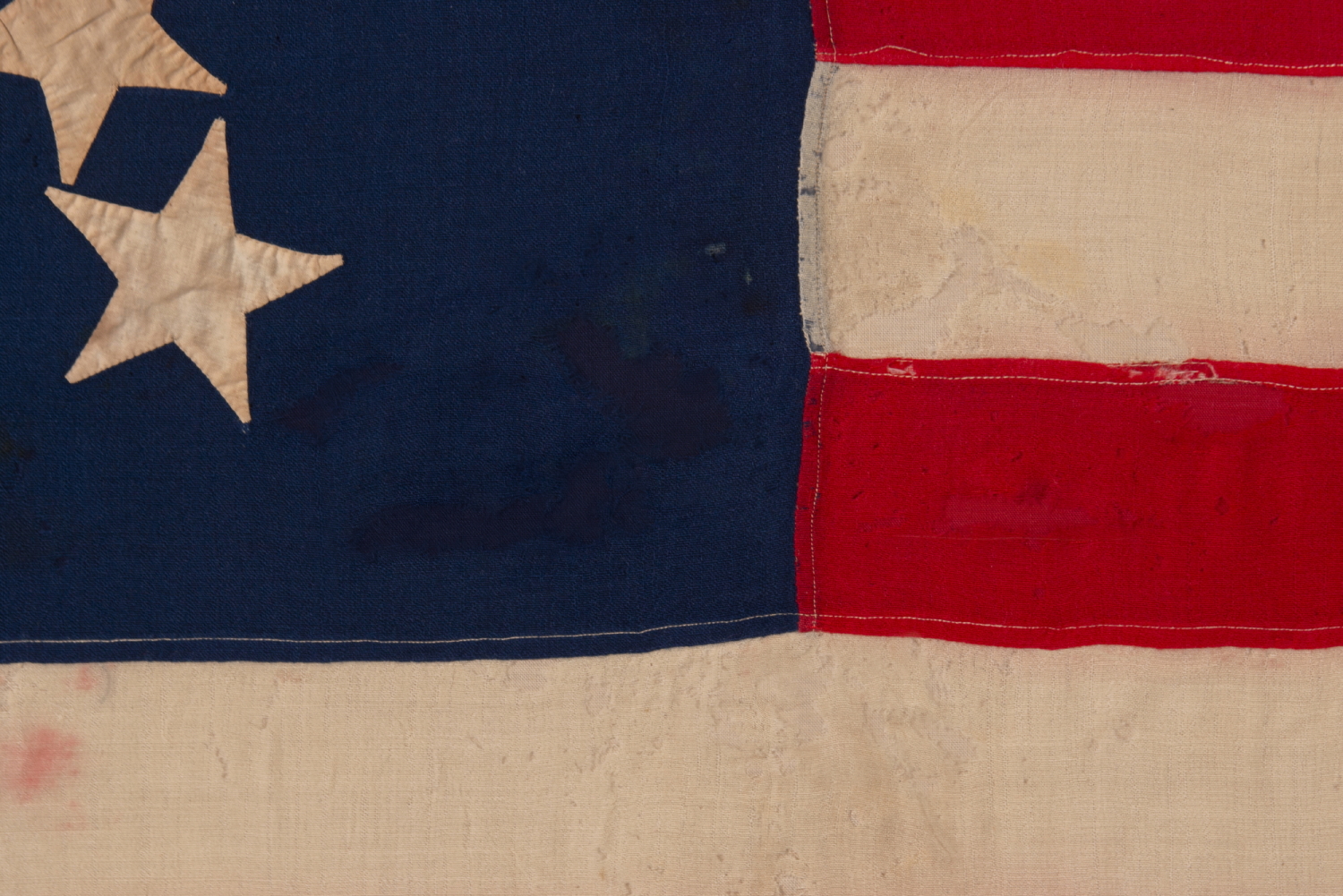
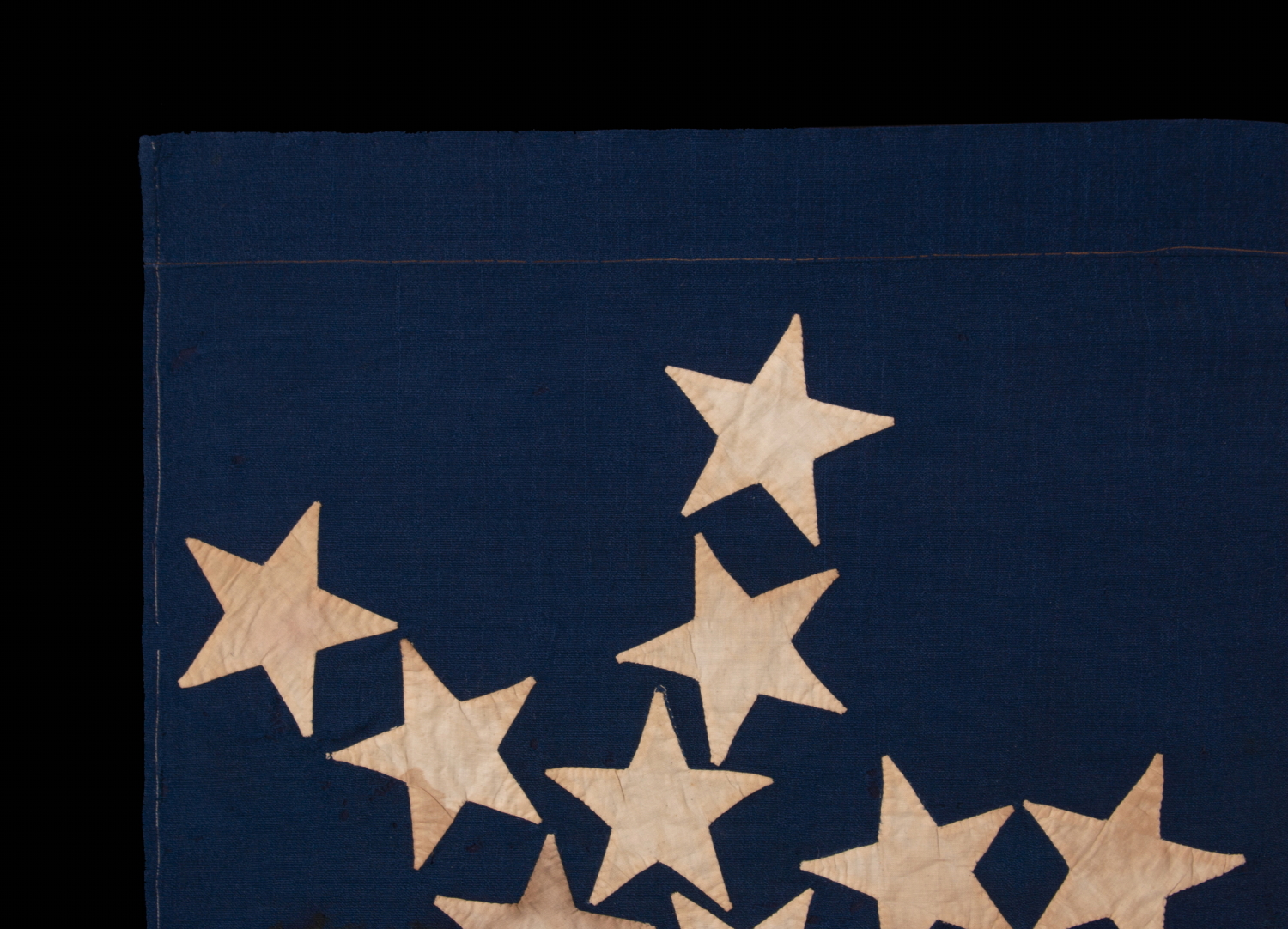
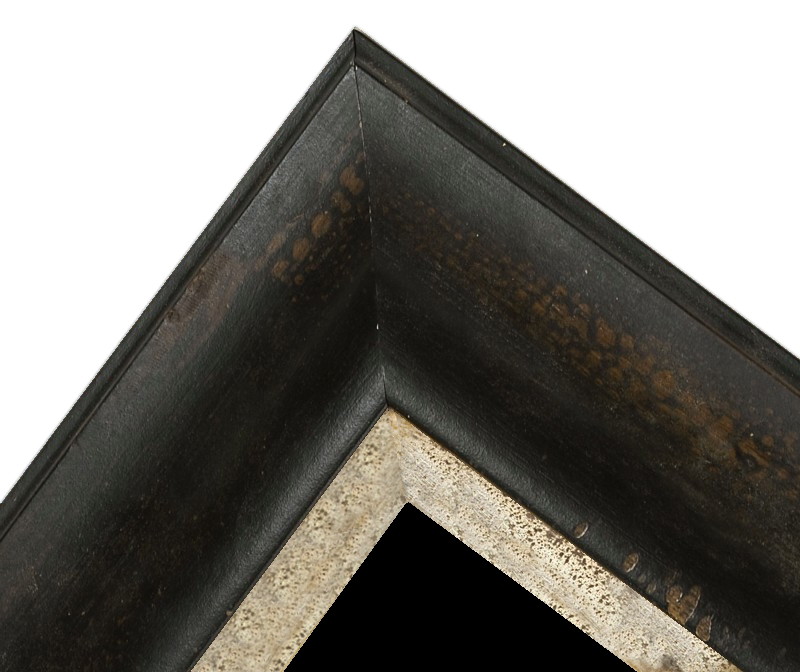
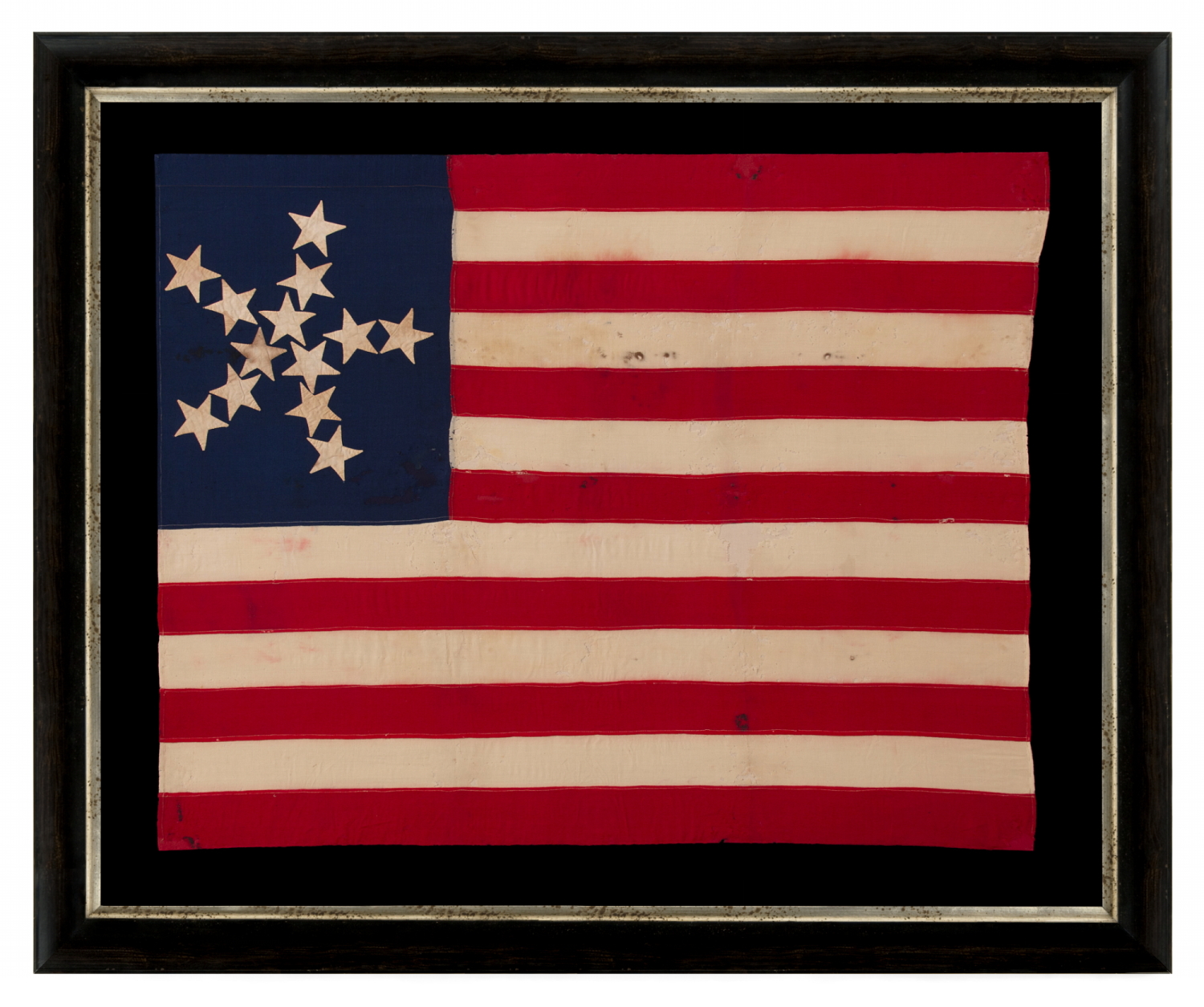
| Extraordinarily rare 13 star flag of the Civil War era, or perhaps immediately prior (circa 1855-65), with what I have termed a ‘Pinwheel Great Star.’ Most Americans are unaware that the legislation that created the Stars & Stripes as the American national flag, passed by Congress on June 14, 1777 (the day we now celebrate as Flag Day), was comprised of but one sentence: “Resolved, that the flag of the United States be made of thirteen stripes, alternate red and white; that the union be thirteen stars, white in a blue field, representing a new constellation.” Given the level of importance bestowed upon the flag today, and its role over the course of American history, most people are surprised to learn that it was not only at the point of our flag’s inception, but during the 135 years that followed, that only the most scant specifics governed the flag’s appearance. Blatantly absent is a description of what this new constellation was supposed to look like. The shape of the stars received no mention, nor did the desired shades of red and blue. The proportions of the flag itself were not indicated, nor was there any direction as to where the blue canton (union) was to be set against the striped field. In spite of the fact that Vermont became America’s 14th state in 1791, followed by Kentucky in 1792, American flags with 13 stars have been produced pretty much continuously from 1777 to the present, for reasons both patriotic and utilitarian. With the exception of a fairly brief pause between roughly 1795, when the Second Flag Act took effect, increasing the count of both stars and stripes to 15, and the War of 1812 (1812-1815), the production of 13 star flags seems not to have ceased. We still make them today. Because this was the original number of stars on the American flag, representing the 13 colonies, it was appropriate for any device made in conjunction with celebrations or notions of American independence. Flags with 13 stars were thus displayed at patriotic events, including, though certainly not limited to such occasions as Lafayette’s final visit to America and ‘Grand Tour,’ between 1824-25, the celebration of our nation’s 100th birthday in 1876, and longstanding celebrations of Independence Day. From at least 1840 onward, 13 star flags were produced to advertise the campaigns of presidential candidates, in attempt to draw a parallel between the past and present struggles for liberty during. They were carried by soldiers during the Mexican and Civil Wars, for the same reason; throughout history, and even today, they are boldly displayed at every presidential inauguration. The original purpose for the creation of a national flag was to identify American ships on the open seas. In spite of what appears in countless books, movies, paintings, and other media, the Stars & Stripes was generally not displayed by ground forces until well into the 19th century. There are exceptions, but largely the use of our flag, prior to the Mexican War (1846-1848) was aboard ships, as well as to mark military garrisons, armories, and government buildings. Flags with 13 stars were flown on American ships both private and federal. Because the number of stars grew with the addition of new states, it became more and more difficult to fit stars on a small flag so that they may be viewed from afar as individual objects. The U.S. Navy employed the 13 star count specifically on flags made for small boats, because they wished the stars to be more easily discerned at a distance. Prior to the 1880’s this meant most flags measuring 10 feet long, on the fly, and under. Because any star count that has previously been official remains so today according to the Congressional flag acts, all 13 star flags in an otherwise appropriate design remain official flags of the United States. Because officers serving on private ships often mirrored the Navy’s use of signals, the Navy employment of this star count, especially on small flags, seems to have translated to both homemade flags and those sewn by commercial makers. Because there was no official star configuration until 1912, their placement before that time was left to the whims of the maker, or at time dictated by the person or entity that commissioned a flag’s manufacture. Most makers structured their stars in lineal rows or columns. Within those flags that display 13 stars, many employed a circular wreath, most often with a star in the center, and, from the Civil War onward, sometimes with a flanking star in each corner, outside the basic design. Multiple wreaths of stars were popular during the mid-late 19th century, but there many other star patterns. One of the most notable was something called the “Great Star” or “Great Luminary” pattern. Characterized by one large star, made up of smaller ones, I have regularly referred to this as the ‘Rolls Royce’ of geometric designs. Universally loved and revered by flag collectors and aficionados, when the elusive Great Star is encountered, it most often occurs in star counts between 21 and 38. In the case of early flags with 13 stars, however, the pattern is acutely rare. Among surviving 18th and 19th century flags with sewn construction, this is, in fact, one of but a tiny handful in the 13 star count that incorporates any of the three basic styles that can be filed beneath the Great Star heading.* In the case of this particular example, the stars are configured in a pinwheel style arrangement, like the rowel of a spur. Just two examples of antique American flags in this rare variant are known, both of which date to the 19th century, both of which I have had the great privilege to own. Arguably the most striking of all known 13 star designs, this is the visually superior of the two. Having owned more than 1,000 examples of 13 star flags, made between the 18th century and the first quart of the 20th, I can confidently say, without doubt or hesitation, that this vies among the short list of the best that I have ever encountered, or know to exist. The stars of the flag are made of cotton, hand-sewn, and double-appliqued (applied to both sides). Note, in particular, the tall and narrow profile of the canton, which contributes significantly to the graphic impact of the flag’s presentation. The canton and stripes are all made of fine, merino wool, that has been pieced and hemmed with treadle stitching. There is no formal binding along the hoist. Instead this flag is intended to have been tacked to a staff, with the intent that it be carried on foot. Though no specific history of use is known, likely this served as either the headquarters flag for a high ranking officer, or as a flank guidon / central guide flag for an infantry unit, or as the primary flag of a local militia company. The size reflects any of these uses as high probability. The squarish overall form is decidedly military, as-is the tall and narrow canton, both of which mimic Civil War battle colors of the Union Army. Though not among the styles of flags produced by the various depots that supplied Civil War regiments, this bears all of the characteristics of a professional flag-maker. Though less common than military use flags made of silk or wool bunting, merino wool represents a high grade, popular fabric, often available from commercial and cottage industry makers. When it appears in flags of the Civil War era, it is often seen in some of the most beautiful examples, with some of the most attractive and unusual star arrangements. All-in-all, one of the best 13 star flags that anyone could own, worthy of any collection. * Represented by 6-pointed star formations, pinwheel stars, and something that I have termed a ‘circle star,’ the latter characterized by a wreath, with a number of satellites adjacent to the outer perimeter. Mounting: The flag was mounted and framed in-house. For more than 25 years we have maintained our own specialized department for this purpose, with expert staff. We take great care in the mounting and preservation of flags, and related textiles, and have preserved thousands of examples. The black-painted, hand-gilded and distressed molding, with its wide, ogee profile, and silver inner lip, is Italian. The background is 100% cotton twill, black in color, that has been washed and treated for colorfastness. The glazing is Optimum Museum Acrylic (Plexiglas), U.V. protective, anti-glare, and scratch resistant. Feel free to contact us for more details. Condition: There are minor to moderate areas of fabric loss throughout, accompanied by an area of moderate to significant loss in the lower, fly end corner of the canton, and moderate to significant scatterings of loss in the 2nd, 3rd, and 4th white stripes, and an areas of significant loss near the center of the 4th white stripe. Fabric of similar coloration was placed behind the flag, during the mounting process, for masking purposes. There is minor to modest bleeding of the red dye in the 1st-5th white stripes. There are instances of minor to modest soiling in the stars, two of which exhibit moderate of the same, and there are a number of small dark stains in the striped field, most notably in the 3rd and 6th white stripes, and in the 1st, 4th, and 6th red stripes. Many of my clients prefer early flags to show their age and history of use. The great rarity of this example well-warrants practically any condition. The flag presents beautifully. |
|
| Video: | |
| Collector Level: | Flags for the truest Patriots. My best offerings |
| Flag Type: | Sewn flag |
| Star Count: | 13 |
| Earliest Date of Origin: | 1860 |
| Latest Date of Origin: | 1865 |
| State/Affiliation: | 13 Original Colonies |
| War Association: | 1861-1865 Civil War |
| Price: | Please call (717) 676-0545 or (717) 502-1281 |
| E-mail: | info@jeffbridgman.com |
 |
|