| |
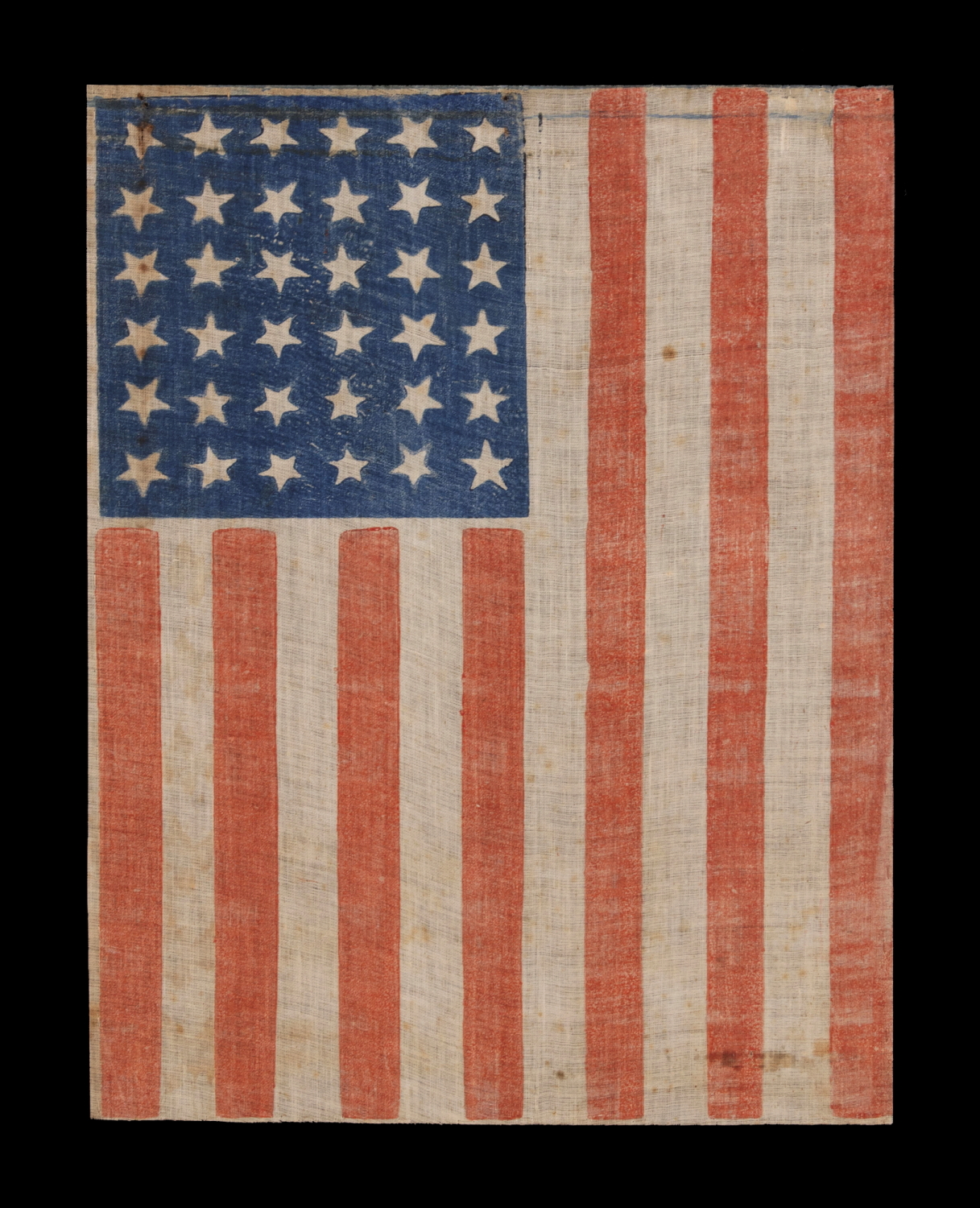
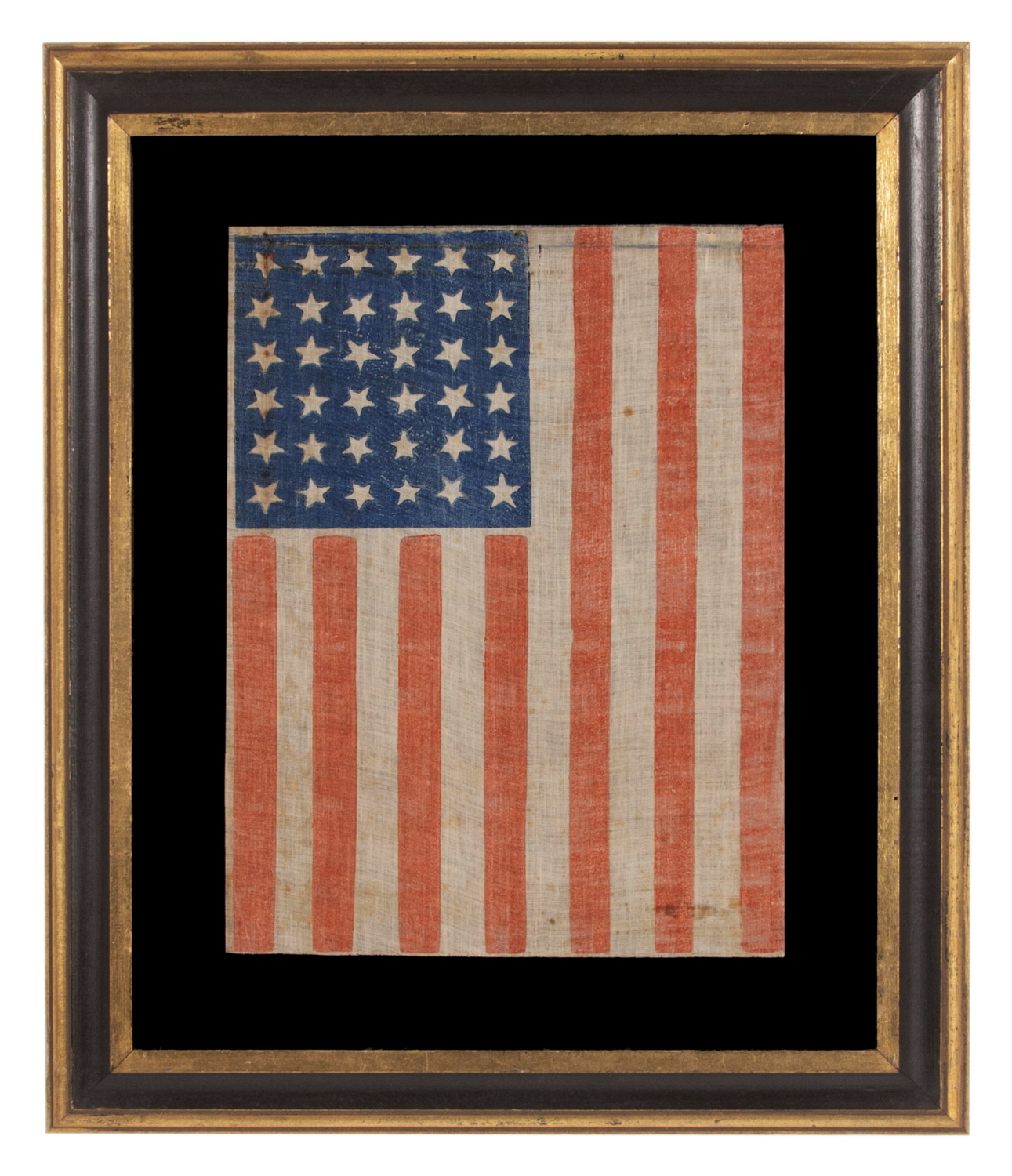
36 STAR ANTIQUE AMERICAN PARADE FLAG, WITH STARS THAT ALTERNATE IN THEIR VERTICAL POSITION FROM COLUMN TO COLUMN AND ROW-TO-ROW, PRINTED ON AN ESPECIALLY INTERESTING LENGTH OF COARSE COTTON WITH A CRUDE WEAVE THAT RESULTS IN A VISUALLY COMPELLING APPEARANCE; CIVIL WAR ERA, NEVADA STATEHOOD, 1864-1867 |
|
| Available: |
Sold |
| Frame Size (H x L): |
22.25" x 18.75" |
| Flag Size (H x L): |
14.5" x 11.25" |
|
| Description....: |
|
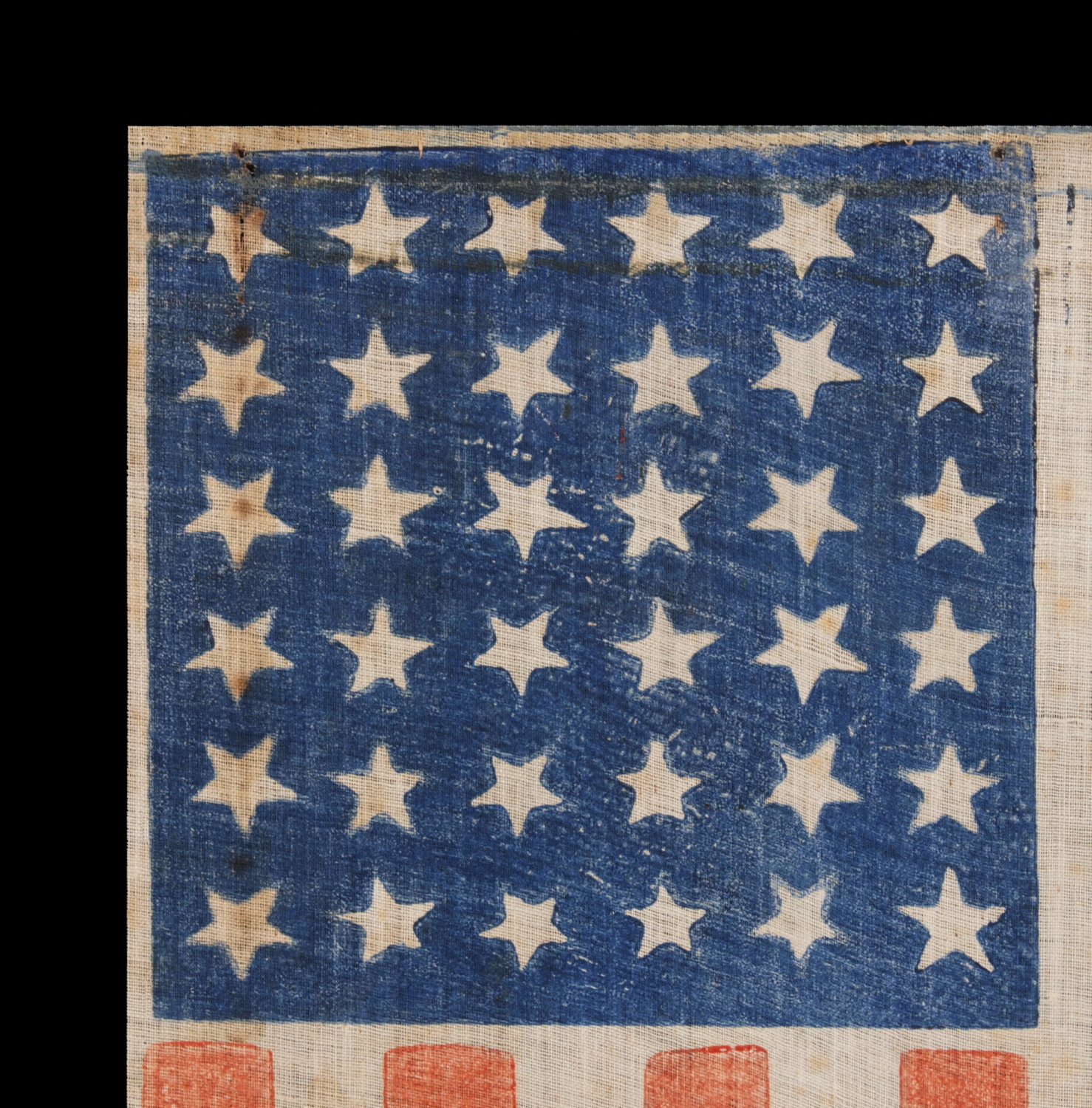
36 star antique American flag, block printed on coarse, glazed cotton. The stars are arranged in justified, linear rows of 6 x 6, which, because the number laid out so logically, was typical of flags in the 36 star count. When viewed vertically, note how the stars in the first column are oriented so that each has one point directed downward, and the second displays all with one arm directed upward, alternating from one column to the next, throughout the formation. If rotated to a horizontal position, note how the position of the stars in the first row are oriented such that each has one arm directed at approximately 11:00, followed by all in the next row with one arm toward 1:00, alternating once again throughout, to create a presentation that I often termed "dancing rows," though it may be just as accurately described as tilting or "canted" rows.
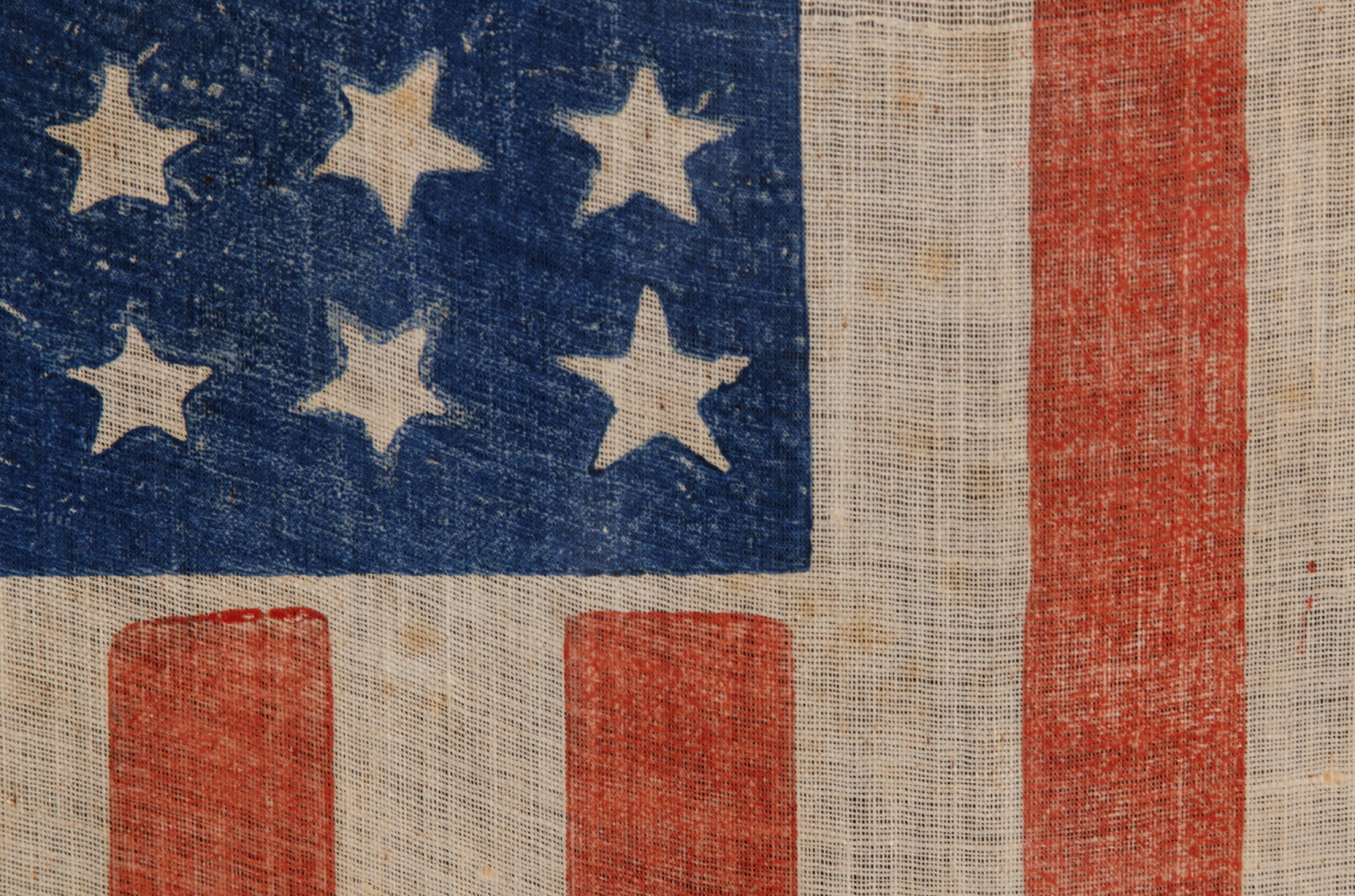
Perhaps the best feature present on this particular example, however, is the coarse cotton fabric on which the flag is printed. Instead of having warp and weft perpendicular to one another, there is a sweeping, serpentine pattern to the weave, which, though certainly unintentional, is both academically and visually compelling.
Lincoln pushed Nevada through to statehood on October 31st, 1864, during the Civil War, just 8 days before the November election. The territory’s wealth in silver was attractive to a nation struggling with the debts of war, enabling the Republican platform. Though the 36th star would not be officially added until July 4th, 1865, the makers of printed flags are known to have begun adding the 36th star as early as July, 1864, several months before the addition of Nevada actually occurred. This was a common practice during the late 19th century, reflecting both the nation's desire for Westward Expansion, and the hope of flag-makers to bring new star counts to market before their competitors. The 36 star flag was replaced by the 37 star flag in 1867, following the addition of Nebraska.
Mounting: The flag was mounted and framed within our own conservation department, which is led by expert staff. We take great care in the mounting and preservation of flags and have framed thousands of examples.
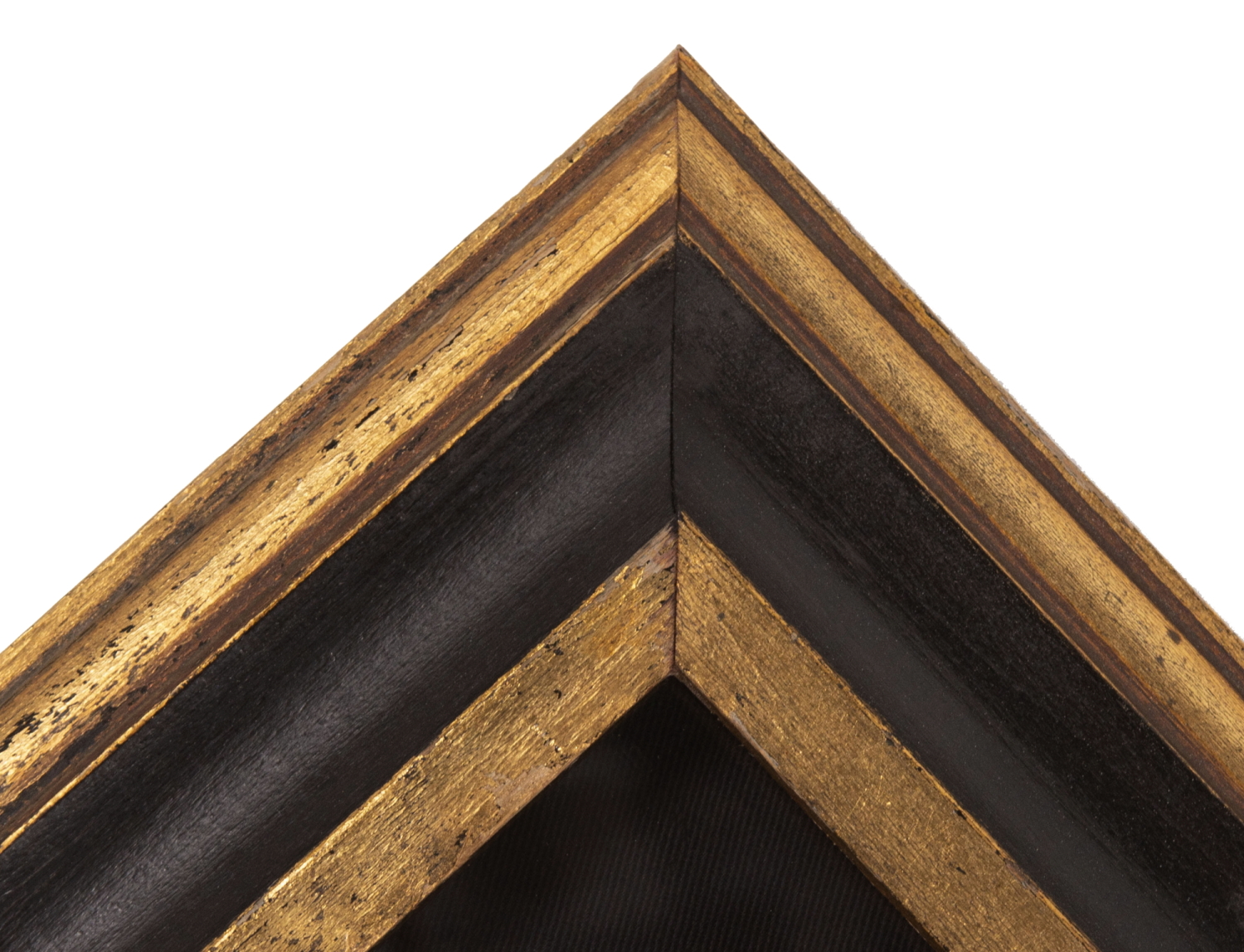
The black-painted and gilded molding dates to sometime between roughly 1920 and the 1940’s. The flag has been hand-stitched to a background of 100% cotton twill, black in color, that has been washed and treated for colorfastness. Spacers keep the textile away from the glazing, which is U.V. protective glass.
Condition: There is very minor soiling in limited areas, accompanied by minor of the same in the upper, fly end corner. There are modest to moderate stains through the first row of stars (when the flag is viewed horizontally, and dots of the same near the fly end of the 4th white stripe, and beneath the canton in the 5th white stripe, and spanning the 11th and 12th stripes, near the hoist end. The flag was at some point tacked to a wooden staff that was painted blue-green, as evidenced by small tack holes near the hoist end and minor lines of transferred pigment. Many of my clients prefer early flags to show their age and history of use. |
|
|
|
| Collector Level: |
Intermediate-Level Collectors and Special Gifts |
|
| Flag Type: |
Parade flag |
|
| Star Count: |
36 |
|
| Earliest Date of Origin: |
1864 |
|
| Latest Date of Origin: |
1867 |
|
| State/Affiliation: |
Nevada |
|
| War Association: |
1861-1865 Civil War |
|
| Price: |
SOLD |
|
| |
Views: 133 |
|
|
|

)