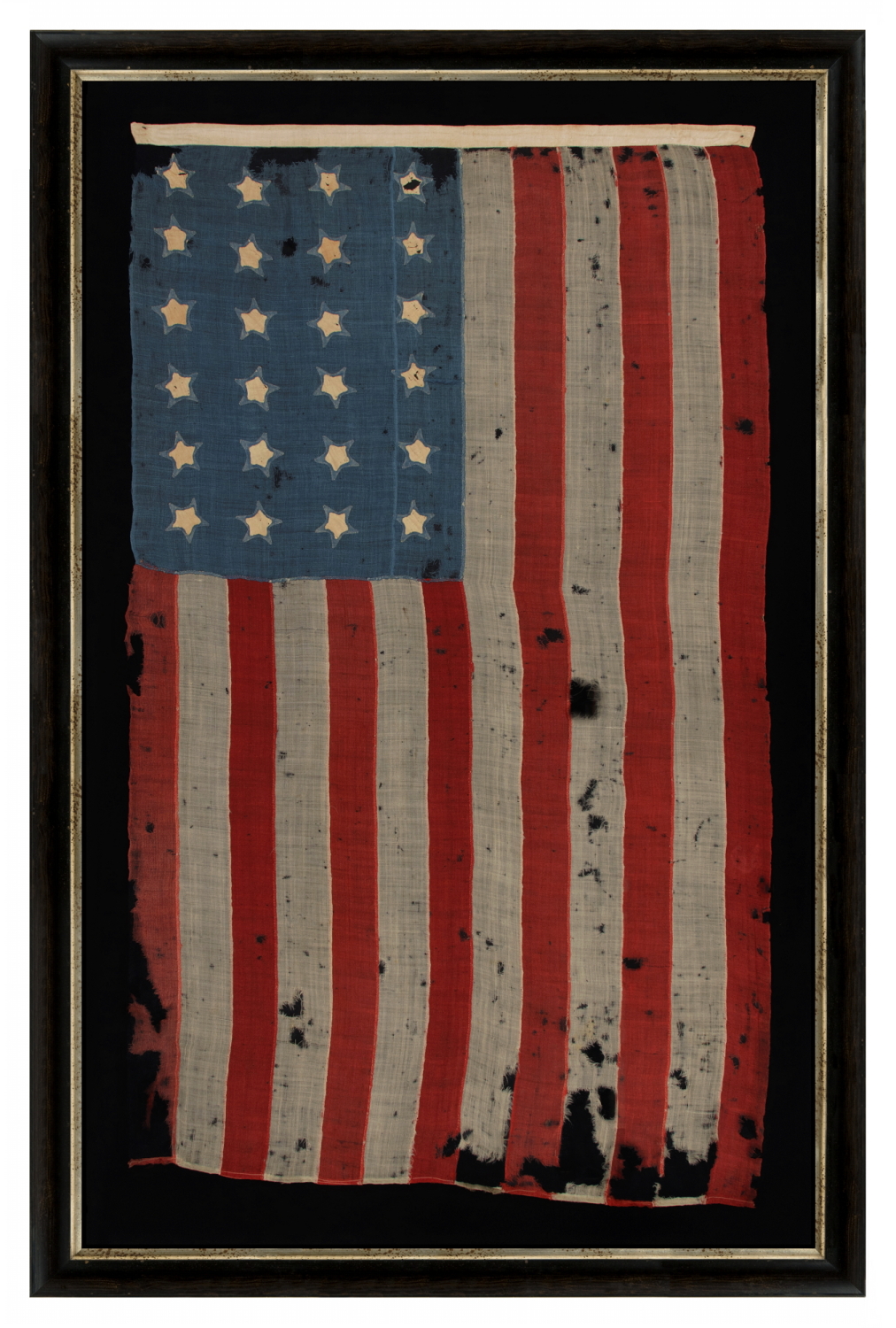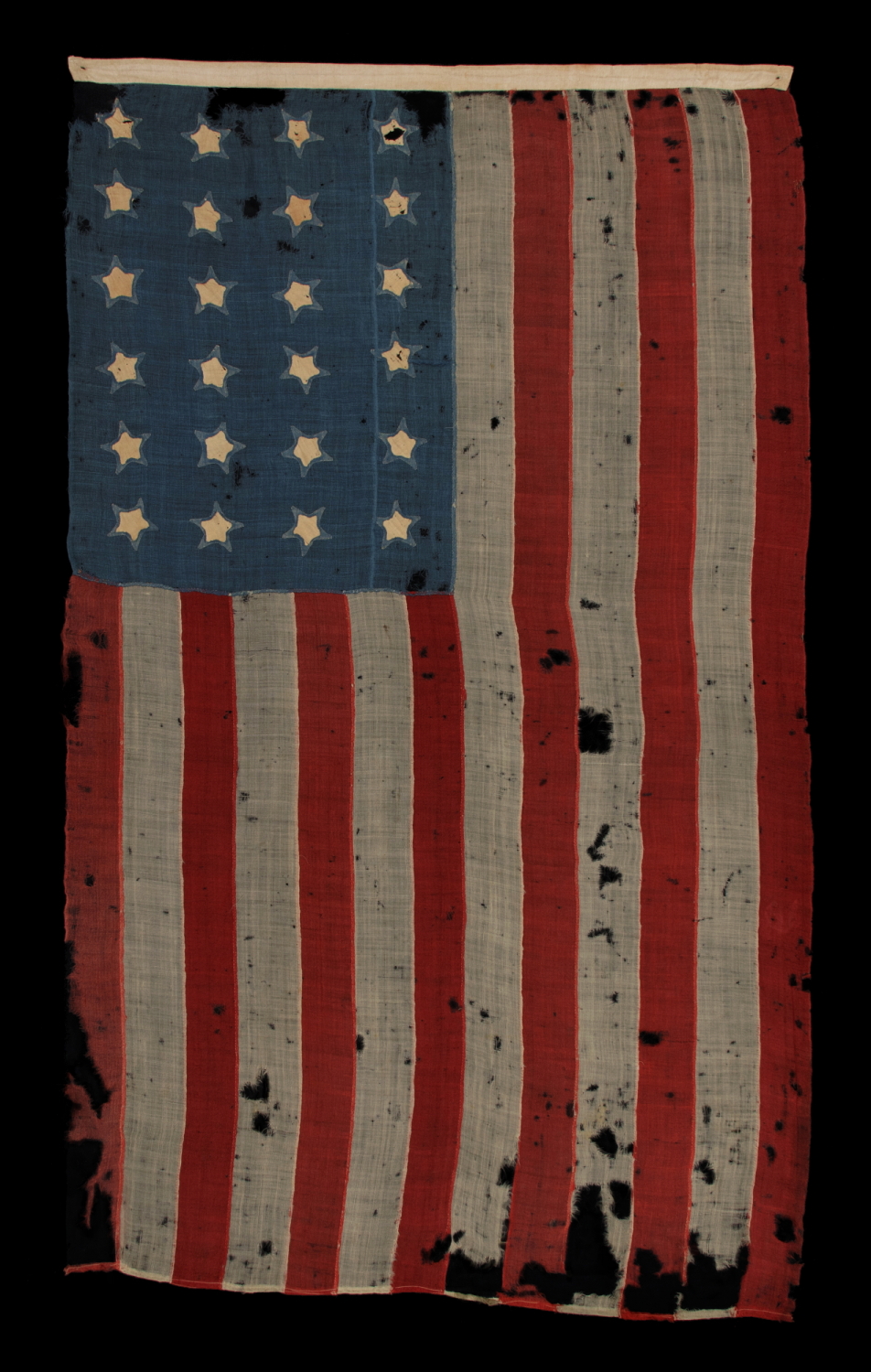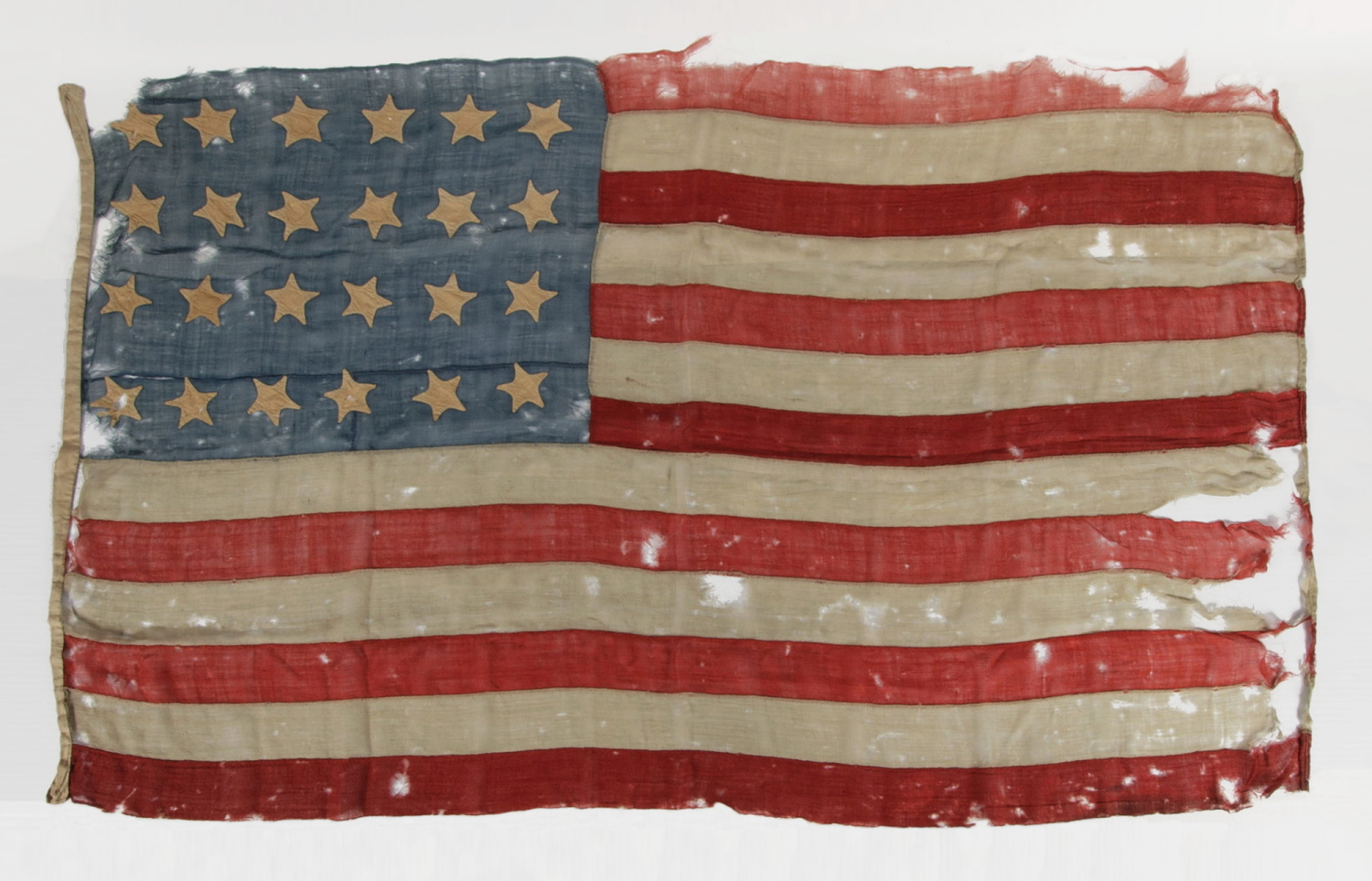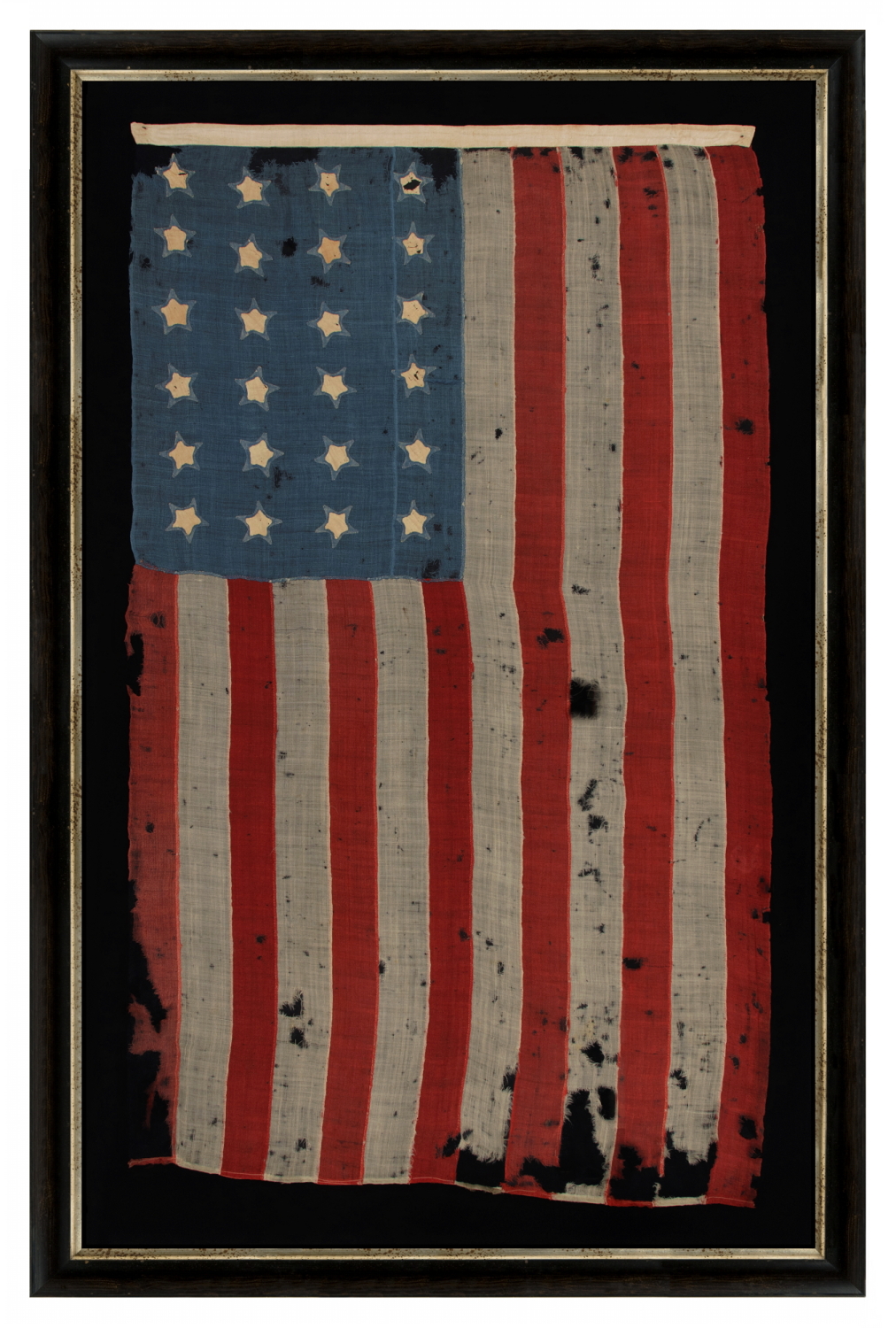
| 24 STAR ANTIQUE AMERICAN FLAG, MADE IN THE PERIOD WHEN MISSOURI WAS THE MOST RECENT STATE TO JOIN THE UNION, 1821-1836; AN EXTREMELY RARE STAR COUNT; EXPERTLY SEWN, BUT WITH HIGHLY UNUSUAL, SINGLE-APPLIQUED STARS THAT EXPOSE A PECULIARLY SMALL WINDOW ON THE REVERSE; EXHIBITED JUNE- SEPTEMBER, 2021 AT THE MUSEUM OF THE AMERICAN REVOLUTION |
|
| Web ID: | 24j-803 |
| Available: | In Stock |
| Frame Size (H x L): | 94.25" x 60.75" |
| Flag Size (H x L): | 49" x 82.5" |
| Description: | |
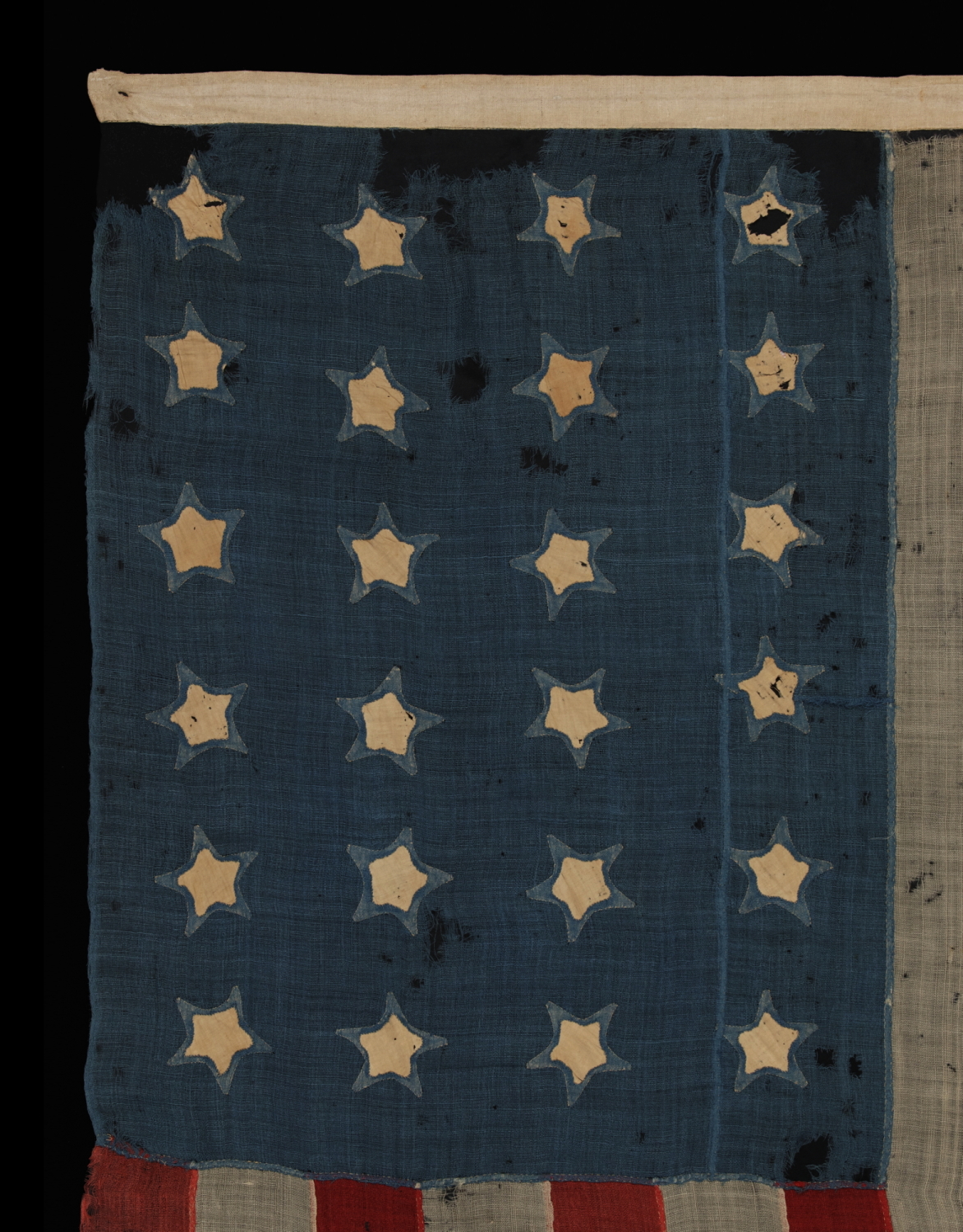
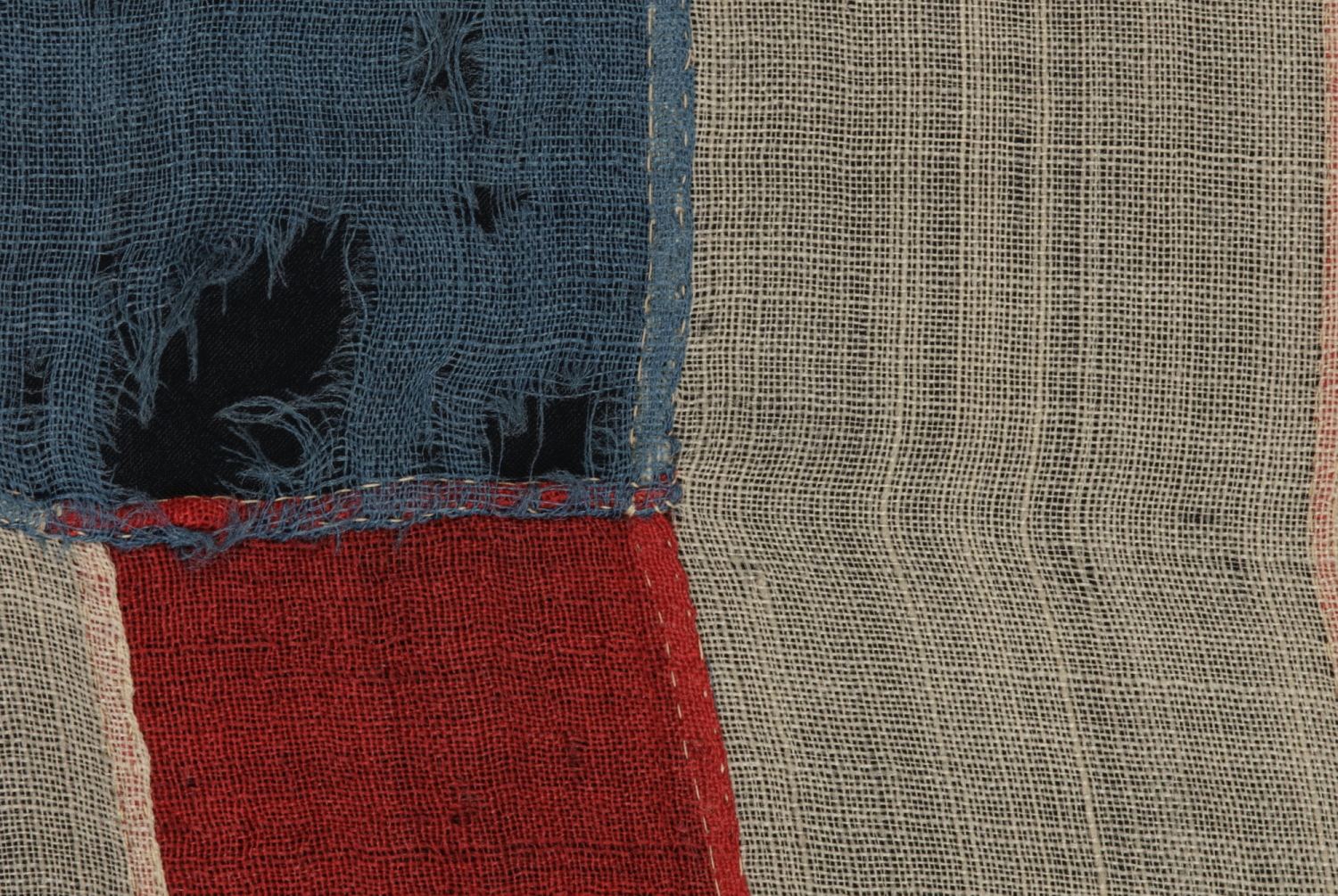
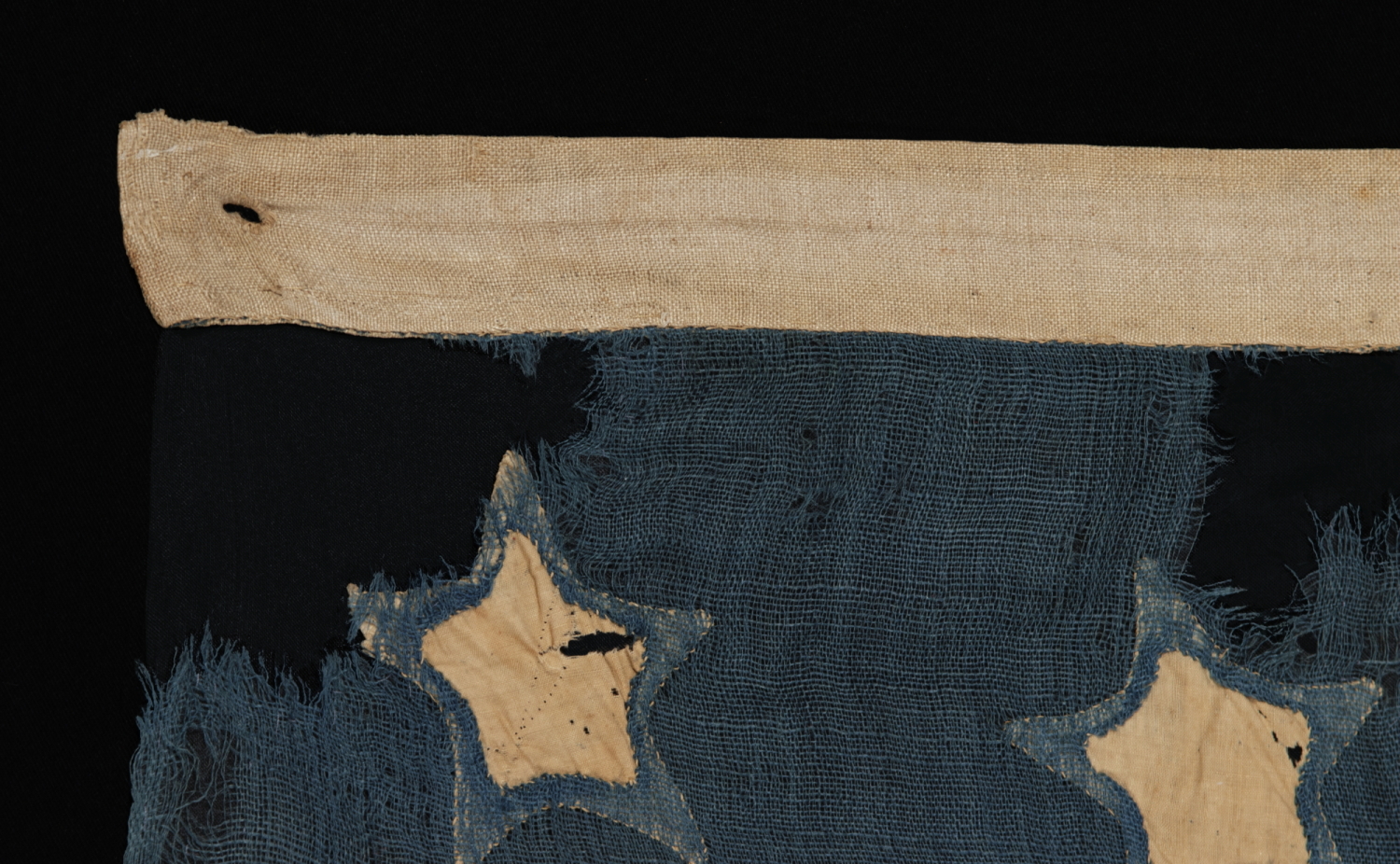
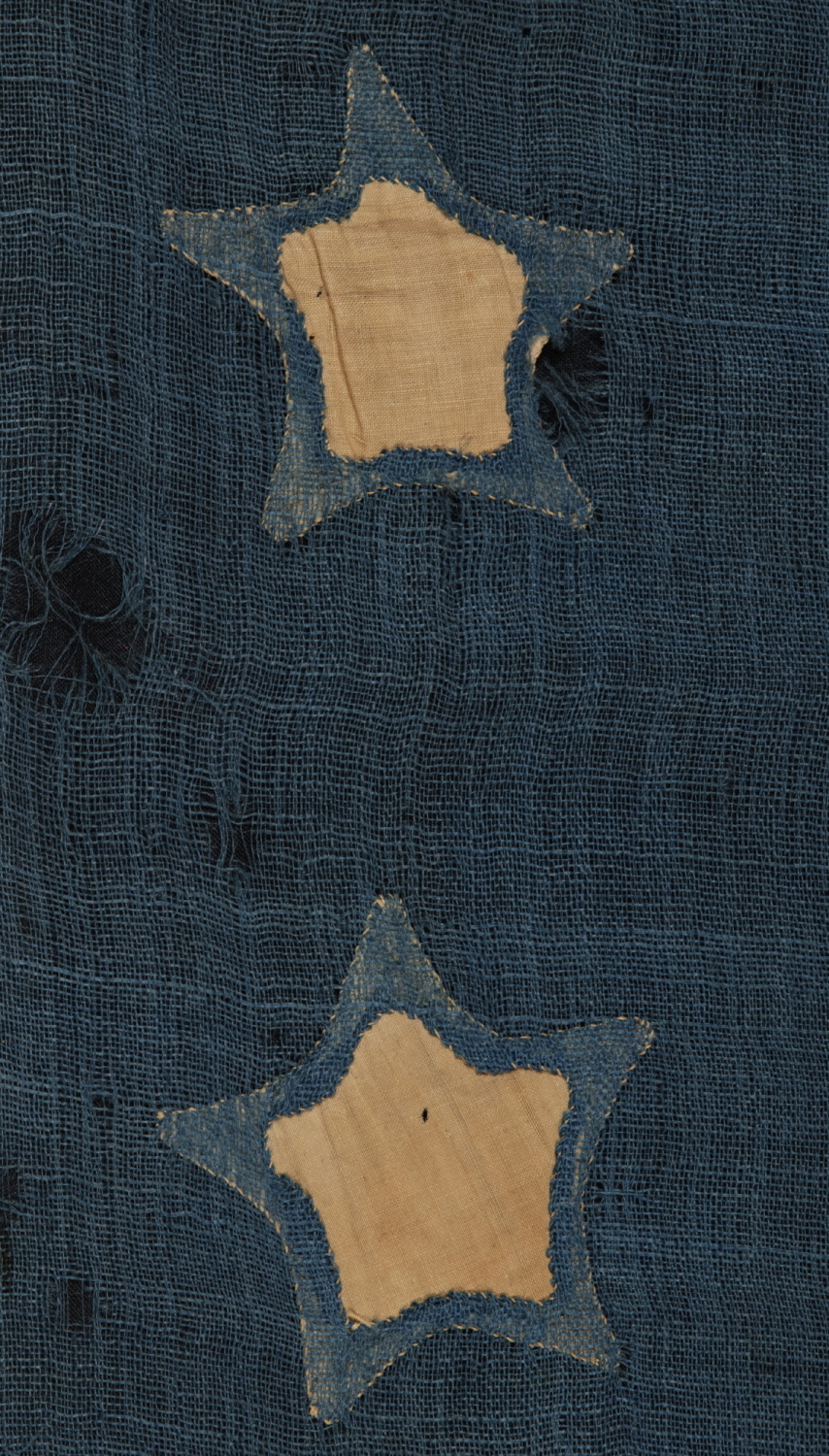
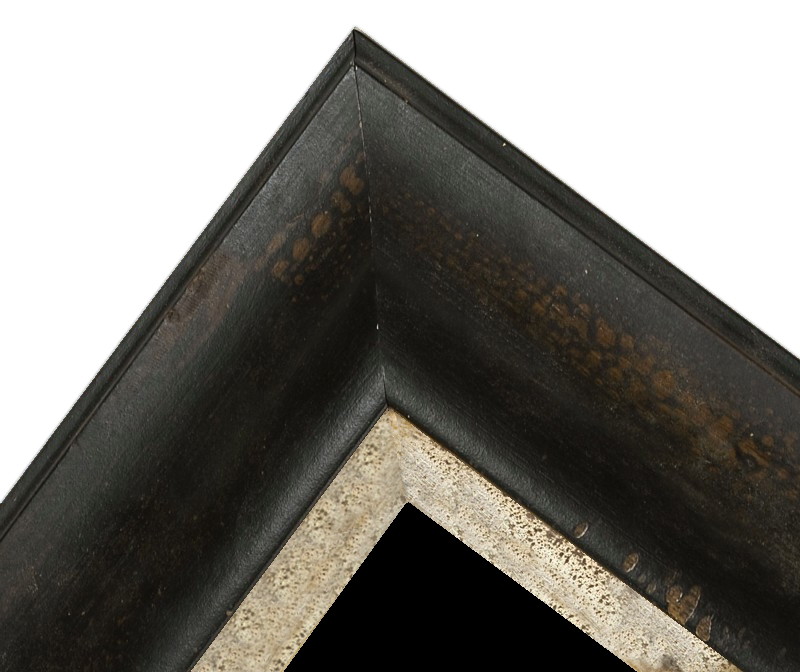
| Missouri became the 24th state on August 10th, 1821. Although stars were not officially added to the American national flag until the 4th of July following a state's addition, [by way of the 3rd Flag Act of 1818,] the 24th star would have been added by most flag-makers, both private and commercial, in or around the time Missouri joined. The 24 star flag became official on July 4th, 1822, and was generally used until the addition of Arkansas as the 25th state, in 1836. Even though this was an extremely long time for a flag to remain current during the 19th century, 24 star flags that date to this period are extraordinarily rare. Only a small handful of examples exist, certainly fewer than 10. The flag’s construction is hand-sewn throughout, as expected in this period. The canton and stripes are made of an unusually sheer wool bunting, significantly thinner and more translucent than its counterparts of later periods. The stars are made of plain weave cotton and are single-appliquéd. This means that they were stitched to one side only, in this case the obverse, a cut-out was then made on the reverse, and the fabric under-hemmed, so that one star could be seen on both sides. I always find single-appliquéd stars more desirable, not only because they are evidence of a more difficult level of seam-work and stitching, but also because they are more visually intriguing. In this instance, the manner in which they were sewn falls among the most extraordinary and most peculiar than any I have ever encountered. With windows on the reverse far smaller than the actual stars on the opposing side—not something I would ever expect to see, especially from a highly skilled seamstress, such as the one that made this flag—the stars formed by the single applique work are not only half the size, but extremely different in form. Bulbous and irregular, some are so loosely defined as to almost lose their shape entirely. Though the result of such disparity could have easily been a less profound graphic image, and a less interesting flag, the transparency of the loosely-woven fabric allowed both profiles to be seen at once, which makes them almost look as if they are glowing. The resulting presentation, crude, beautiful, and unusual, makes for an example of the Stars & Stripes that doesn’t simply fall among the earliest and most rare known to survive, but one that displays a standout quality among them. It is my opinion that the lack of definition in the windows is not something to be hastily written off as a seamstress desiring to cut corners (no pun intended), but rather her intentional design choice, made not only because it was more practical, but because it was attractive, and, in both respects, constituted a signature of sorts—one she may have actually loved to show off. Note how the stars are oriented in various directions on their vertical axis, which adds yet another whimsical element to the design. In flags with single-appliquéd stars, both the sewing itself, and stretching of the fabrics over time, result in stars that can develop very irregular shapes, which is certainly the case here. Note also how the multiple rows of hand-stitching emphasize their hand-sewn construction. The fact that the canton was pieced from two lengths of fabric reflects the fact that the width of the looms used to make wool bunting were generally eighteen inches. Anything requiring something greater needed to be pieced from more than a single width of fabric. Note, in particular, the beautiful shade of blue employed by the maker. There is a homespun cotton or linen binding along the hoist, with two hand-sewn, buttonhole-stitched grommets. Flags made prior to the Civil War are rare, comprising one to one-and-a-half percent of 19th century flags that have survived into the 21st century. Prior to the Confederate attack on Fort Sumter, the Stars & Stripes was simply not used for most of the same purposes that we employ it in today. Private individuals did not typically display the flag in their yards and on their porches, or wave flags as observers of parades, purely for the display of patriotism. There was some use of this nature during events of extremely historical importance, and, beginning in 1840, in political campaigning, but the occurrence, on the whole, was very unlike modern times. Private use of the national flag rose swiftly in the North, during the patriotism of the Civil War, then exploded in 1876. Even the military did not use the flag in a manner that most people might think. The primary purpose before the Civil War was to mark ships on the open seas. While flags were used to mark garrisons, those of ground troops were often limited to the flag of their own regiment, with a design peculiar unto itself, and perhaps a standard that featured the numeric designation on a on a solid buff yellow or blue ground. Most people are surprised to learn that ground forces were not authorized to carry the Stars & Stripes until it was assigned to artillery regiments in 1834. Infantry was afforded the privilege in 1841, just prior to the Mexican War (1846-1848), while cavalry regiments were not issued their iconic, swallowtail, Stars & Stripes format guidons until the second year of the Civil War, in 1862. At approximately 4 by just under 7 feet, the size of the flag is extremely small among its pieced and sewn counterparts of the 1821-1836 period. Ship’s flags were typically far larger, with national colors, employed by the Navy, as long as 36 feet by the earliest regulations. U.S. Army garrison flags were just as long, at 36 feet on the fly, and sometimes even larger. A “storm flag,” flown at a fort during inclement weather, was 20 feet in length. The primary purpose of flags was as signals, that needed to be recognized from great distance. As time passed, the use became more and more decorative, and more flags were produced for the general display of patriotism. Until 1890, however, most flags with pieced and sewn construction, (as opposed to printed flags—which didn’t exist in the 24 star period,) were very big in modern terms. Because there was very little use for small flags, the smaller they were—especially pre-Civil War—the less purpose they served and the less likely they were to be encountered. Because the average 19th century sewn flag can be cumbersome to frame and display in an indoor setting, many collectors prefer printed parade flags, and smaller sewn flags, like this extraordinarily rare find. In 25 years of aggressive buying, this is one of just 7 flags with 24 stars that I am aware to exist, that actually date to the 1821-1836 period, one of which is institutionalized. Among those known, it ranks the second to the smallest. All major collectors of large sewn flags, who released books on the subject, with examples that bore 24 stars, accompanied by claims that they date to the time period when Missouri was the most recent state to join the Union, have dated them incorrectly. Most of the examples I have seen for sale, that date to the 19th century, are Civil War period flags that exclude the Southern States from the star count. This type of flag was not well understood at the time that collectors were writing the first major books. Like most examples with 30 stars or fewer, they were, and overwhelmingly continue to be, misdated by auction houses, dealers, collectors, museum staff, lay people, and others who examine them. This is because the persons tasked with dating them do not understand them well enough to identify them. Simply put, they have not handled enough material to discern them as period to when we had the number of states represented by their stars, or produced after that time, for political, historical, or other, less obvious functions. For anyone who wishes to actually own a 24 star flag period to the era of Missouri statehood (1821-1836), this example, in such a manageable size, represents a Holy Grail of collectible flags of this star count. Provenance: Exhibited from June 12th – September 6th, 2021 at the Museum of the American Revolution in Philadelphia, in an exhibit entitled “Flags & Founding Documents.” The flag portion of this, curated by Jeff Bridgman, featured 43 flags that span American history as we progressed from 13 to 50 stars, with a particular focus on not only flags that display the anticipated and/or actual addition of states, but the subtraction of both Union and Slave States during the Antebellum and the Civil War periods. Mounting: The flag was mounted and framed within our own conservation department, which is led by expert staff. We take great care in the mounting and preservation of flags and have framed thousands of examples. The flag has been back-stitched (flat-lined) to a 100% natural supportive fabric throughout. It was then hand-stitched to 100% cotton, black in color, that has been washed and treated for color fastness. The black-painted, hand-gilded and distressed molding, is Italian. The glazing is U.V. protective acrylic. Condition: Though patches added over time for stability were removed, obvious losses, sustained from both long-term use and age, were left in as found condition. Many of my clients prefer early flags to show their age and history of use. The extreme rarity of this example well-warrants practically any and all condition issues. |
|
| Video: | |
| Collector Level: | Flags for the truest Patriots. My best offerings |
| Flag Type: | Sewn flag |
| Star Count: | 24 |
| Earliest Date of Origin: | 1821 |
| Latest Date of Origin: | 1836 |
| State/Affiliation: | Missouri |
| War Association: | 1777-1860 Pre-Civil War |
| Price: | Please call (717) 676-0545 or (717) 502-1281 |
| E-mail: | info@jeffbridgman.com |
 |
|