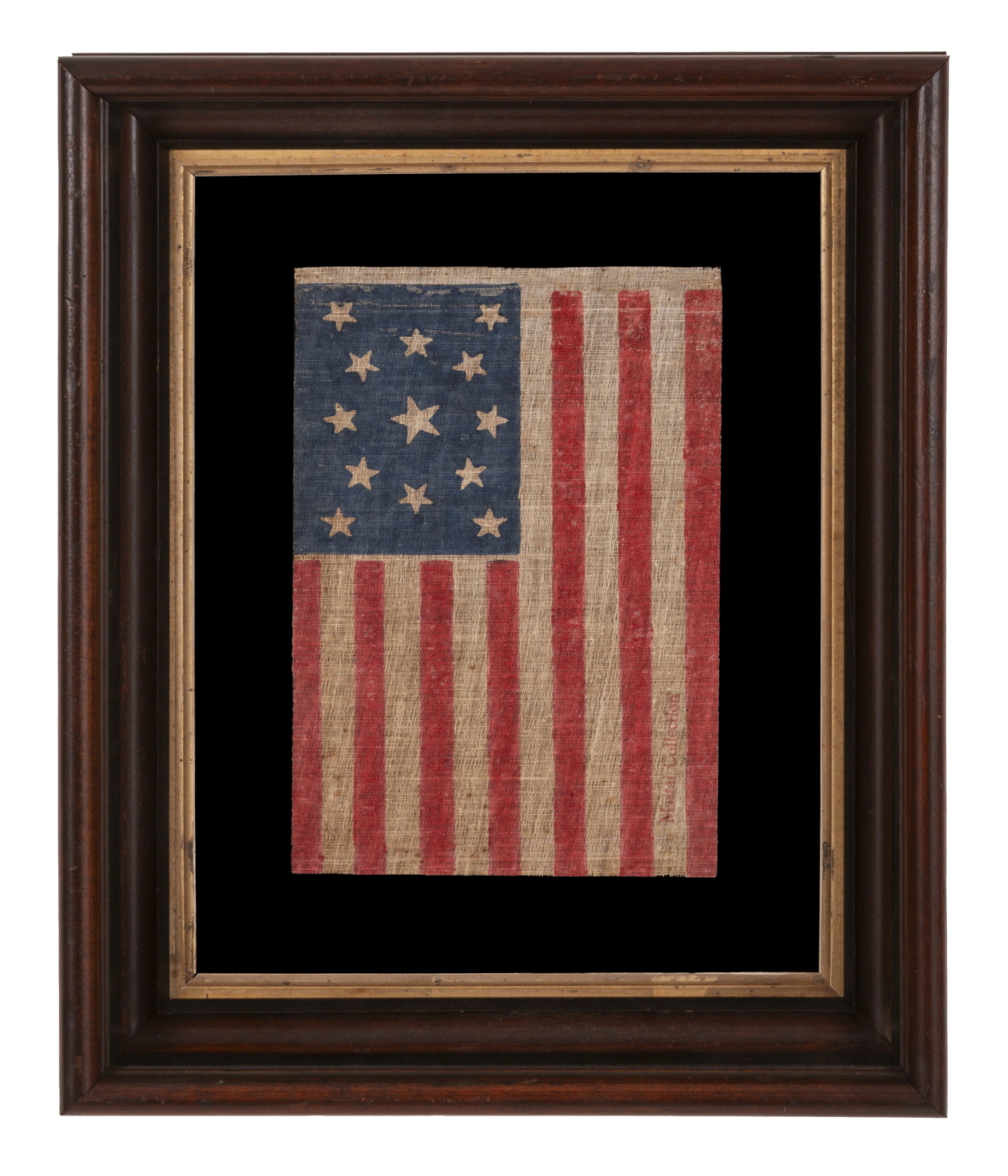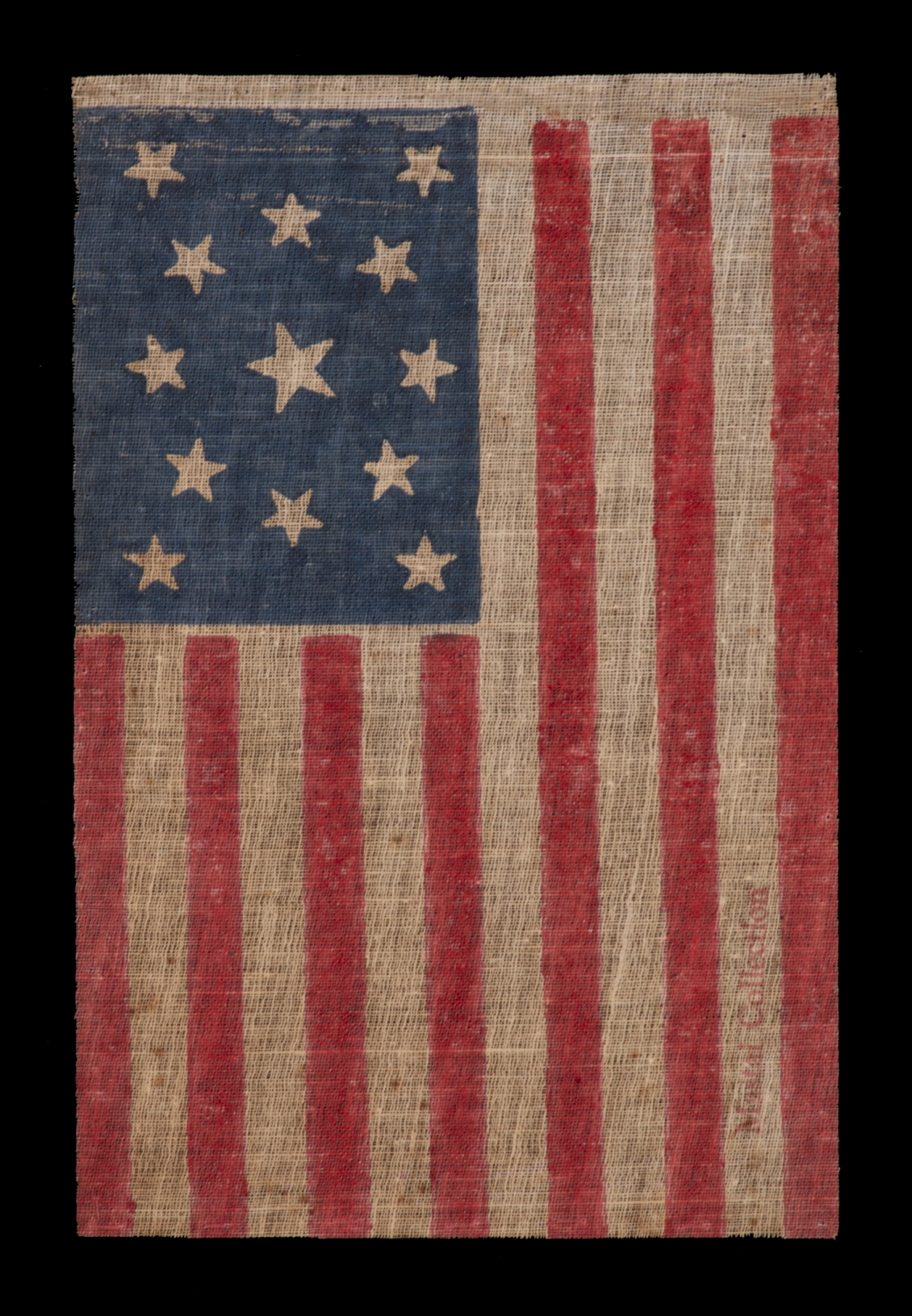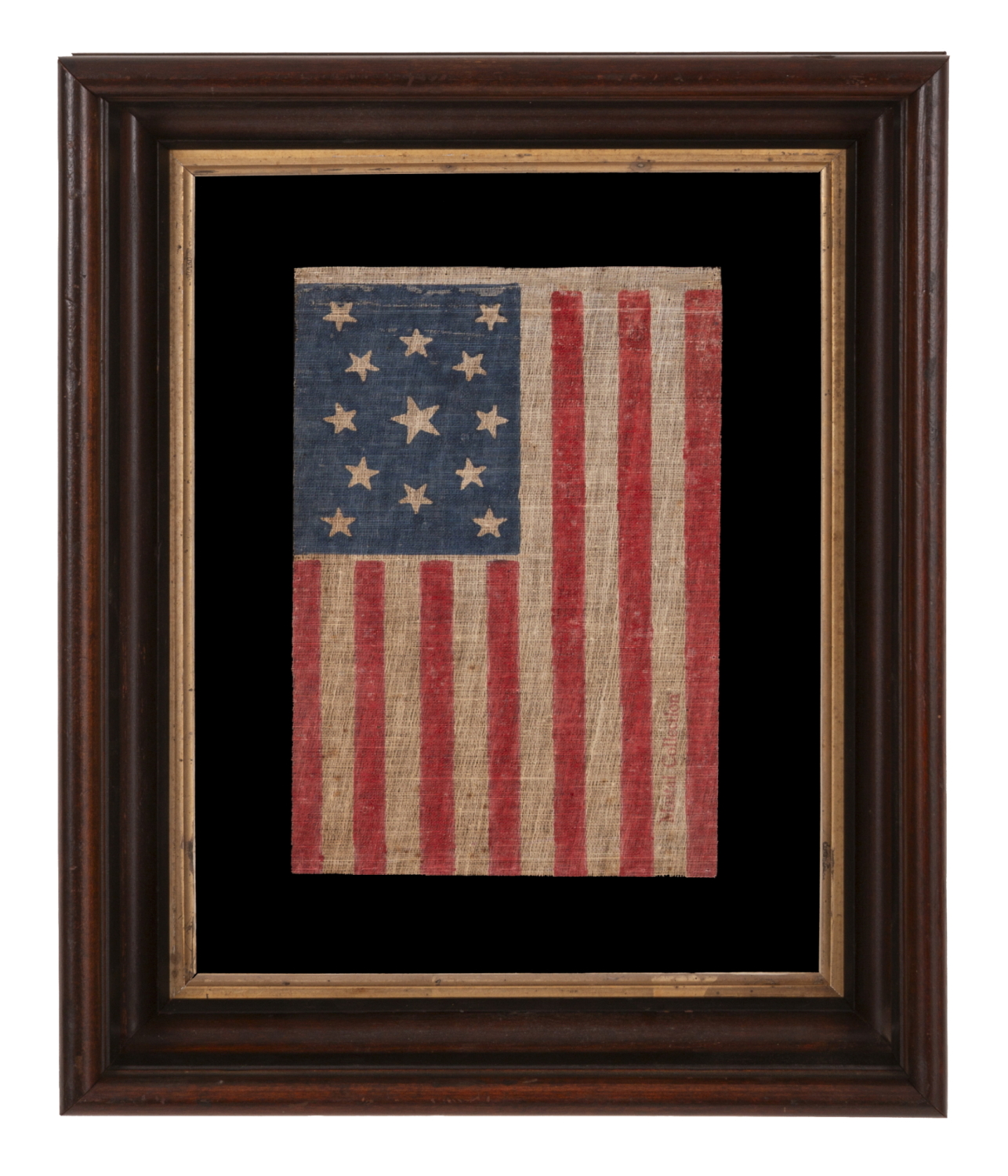
| 13 STARS IN A MEDALLION PATTERN, ON AN ANTIQUE AMERICAN PARADE MADE FOR THE 1876 CENTENNIAL OF AMERICAN INDEPENDENCE, IN AN UNUSUALLY LARGE SIZE AMONG ITS COUNTERPARTS; FORMERLY IN THE MASTAI COLLECTION, MARKED IN THEIR TRADITIONAL FASHION |
|
| Web ID: | 13j-1723 |
| Available: | In Stock |
| Frame Size (H x L): | 17" x 13.75" |
| Flag Size (H x L): | 9.25" x 6" |
| Description: | |
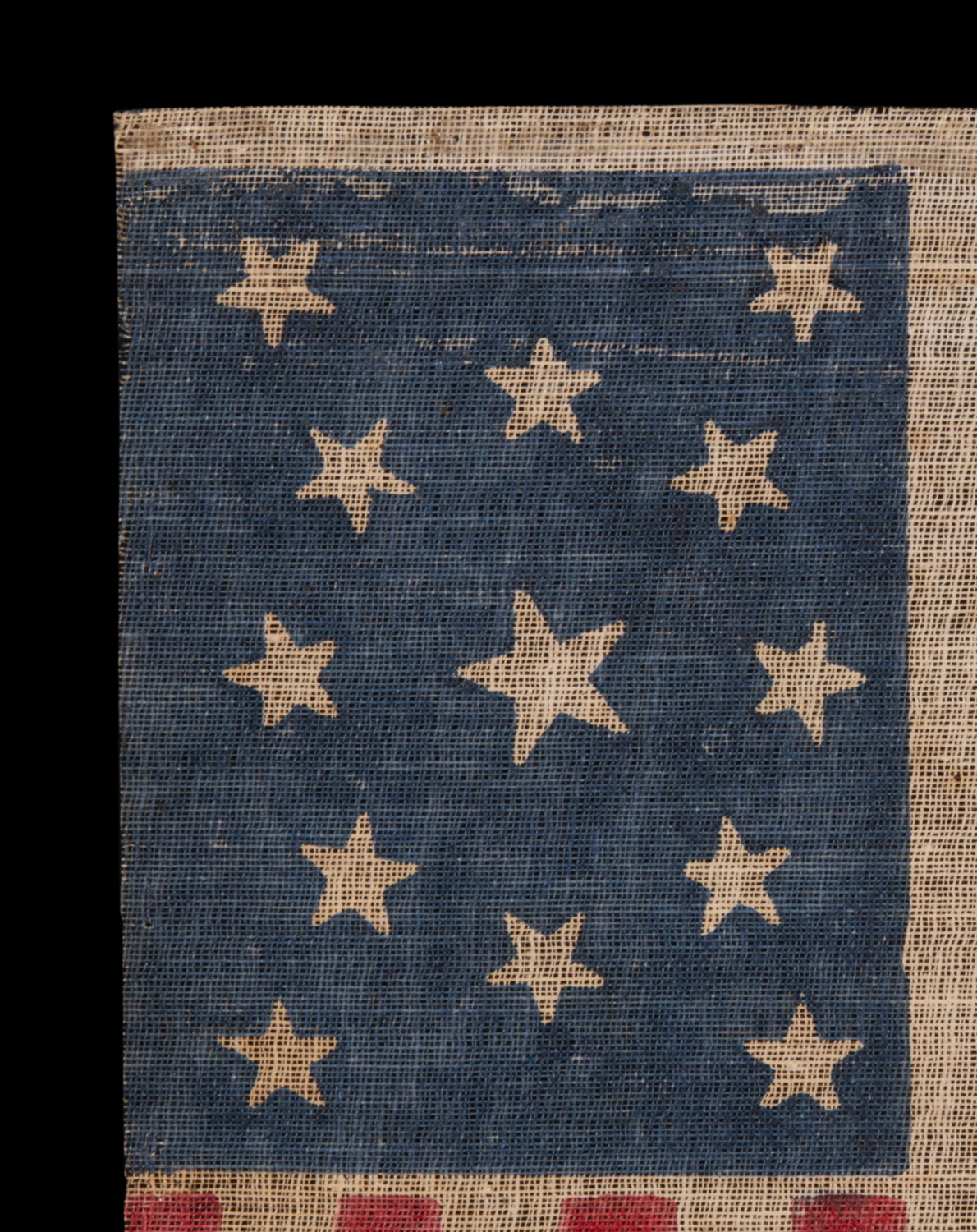
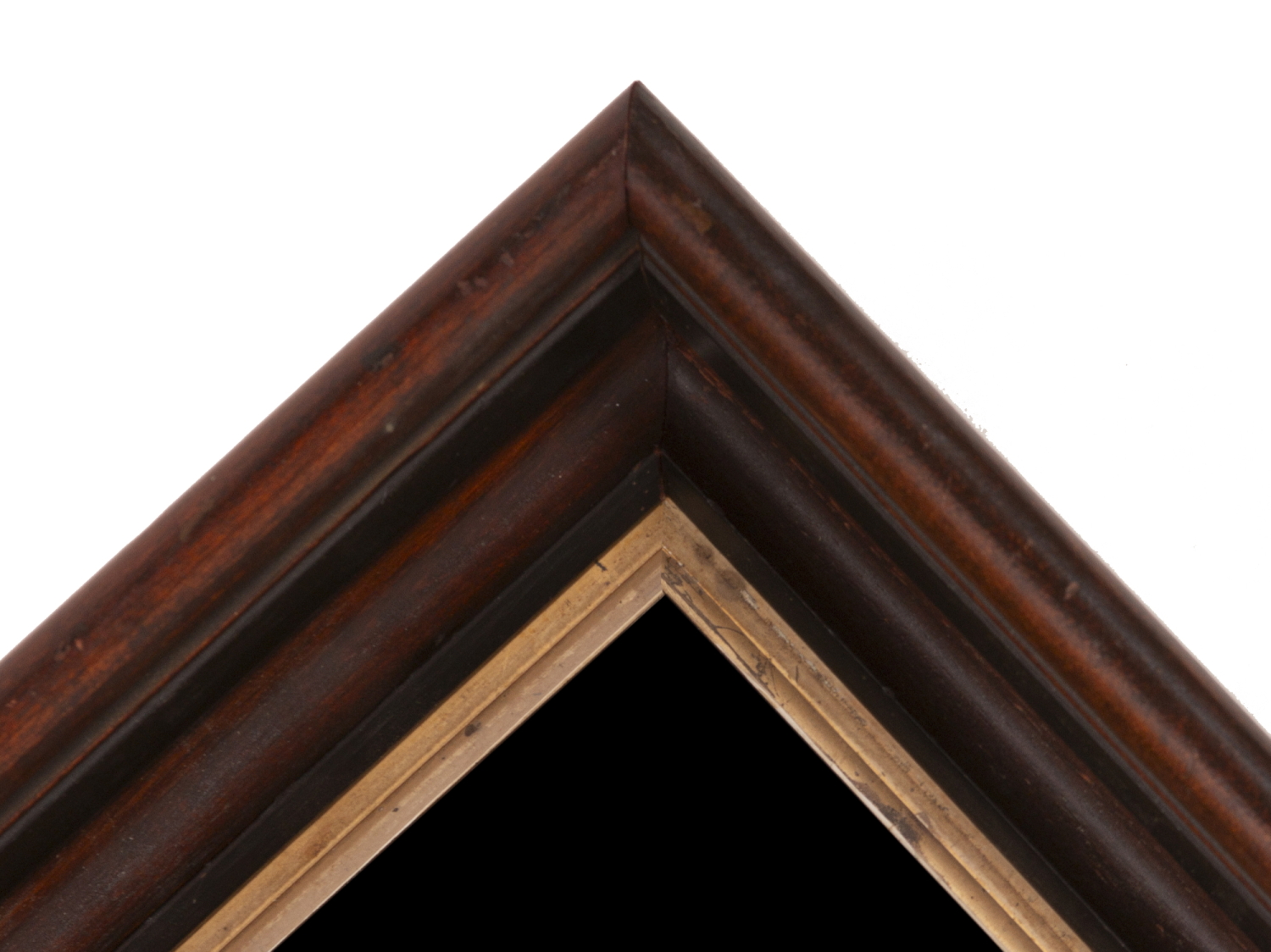
| 13 star American national parade flag, block-printed on coarse, glazed cotton. The stars are arranged in a medallion that consists of a large center star, surrounded by a wreath of eight stars, with a flanking star in each corner of the blue canton. This was a popular centennial design. While the size of the flag may seem small, it is actually larger than most of its 13 star counterparts of this era. The flag was formerly a part of the collection of Boleslaw & Marie D'Otrange Mastai. The Mastais were the first major collectors of early flags to produce a significant, color illustrated text. Published by Knopf in New York in 1973, the Mastai book would become an iconic reference for an ever-growing population of flag enthusiasts. The red-inked, Mastai stamp appears near the flay end of the last white stripe. 13 star flags have been flown throughout our nation’s history for a variety of purposes. In addition to their use at the centennial, 13 star flag were hoisted at other patriotic events, including Lafayette’s visit in 1824-25, the celebration of the nation’s centennial in 1876, and the sesquicentennial in 1926. They were displayed during the Civil War, to reference past struggles for American liberty, and were used by 19th century politicians in political campaigning for the same reason. The U.S. Navy used the 13 star count on small boats until 1916, because it was easier to discern fewer stars at a distance on a small flag. Commercial flag-makers mirrored this practice, and some private ships flew 13 star flags during the same period as the Navy. The use of yachting ensigns with a wreath of 13 stars surrounding a fouled anchor, which allowed pleasure boats to bypass customs between 1848 and 1980, persists today without an official purpose. The flag is presented in its correct vertical position, by way of modern flag ethics, with the canton in the upper left. Mounting: The flag was mounted and framed in our own textile conservation department, led by expert staff. We take great care in the mounting and preservation of flags and have framed thousands of examples. The late 19th century walnut molding, with ebonized decoration and its original, gilded liner, dates to the same period as the flag. The flag has been hand-stitched to a background of 100% cotton twill, black in color, that has been washed and treated for colorfastness. Spacers keep the textile away from the glazing, which is U.V. protective glass. Condition: There is minor to modest soling, accompanied by very minor fading and piment loss. Many of my clients prefer early flags to show their age and history of use. |
|
| Video: | |
| Collector Level: | Intermediate-Level Collectors and Special Gifts |
| Flag Type: | Parade flag |
| Star Count: | 13 |
| Earliest Date of Origin: | 1876 |
| Latest Date of Origin: | 1876 |
| State/Affiliation: | 13 Original Colonies |
| War Association: | |
| Price: | Please call (717) 676-0545 or (717) 502-1281 |
| E-mail: | info@jeffbridgman.com |
 |
|