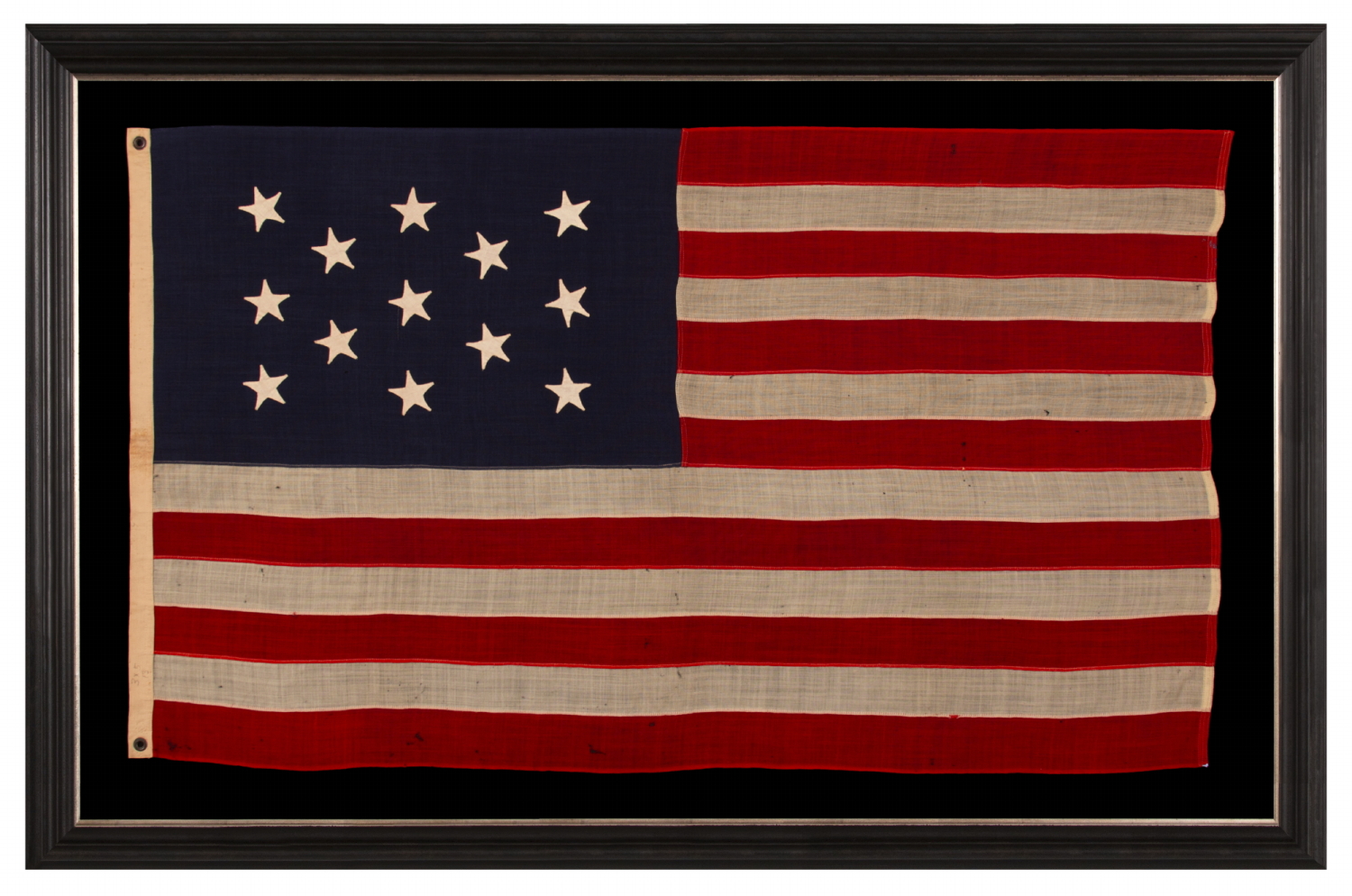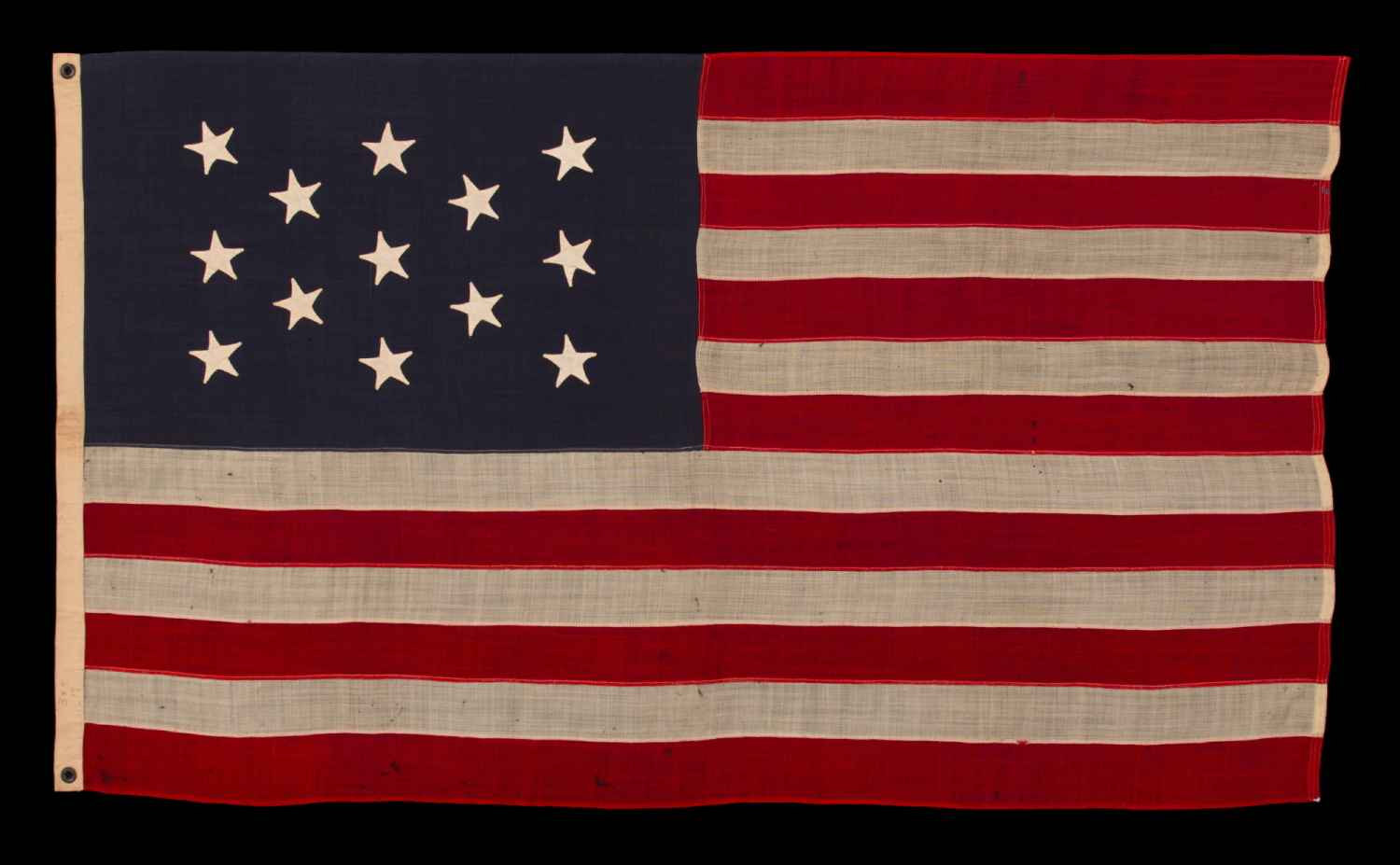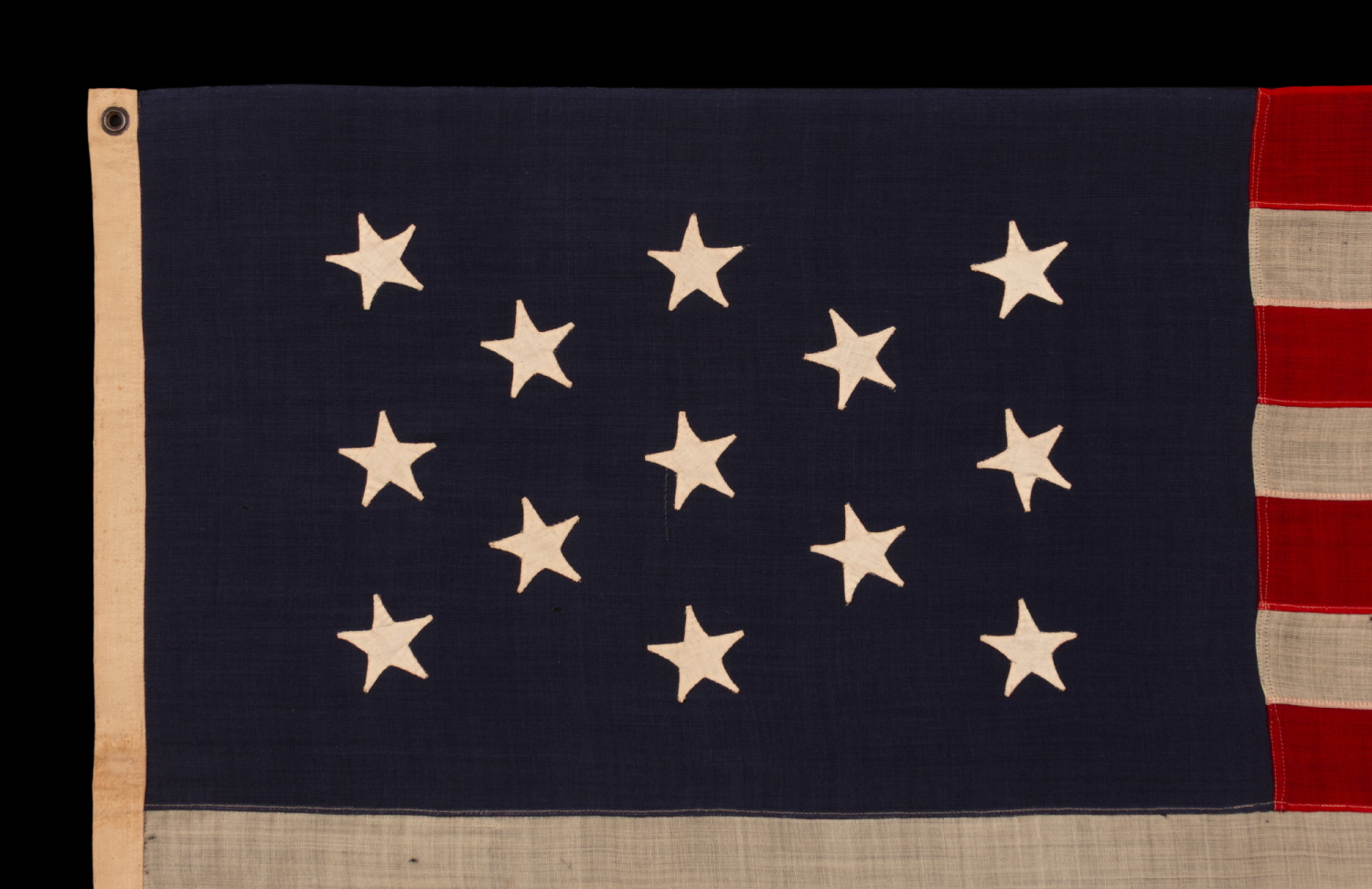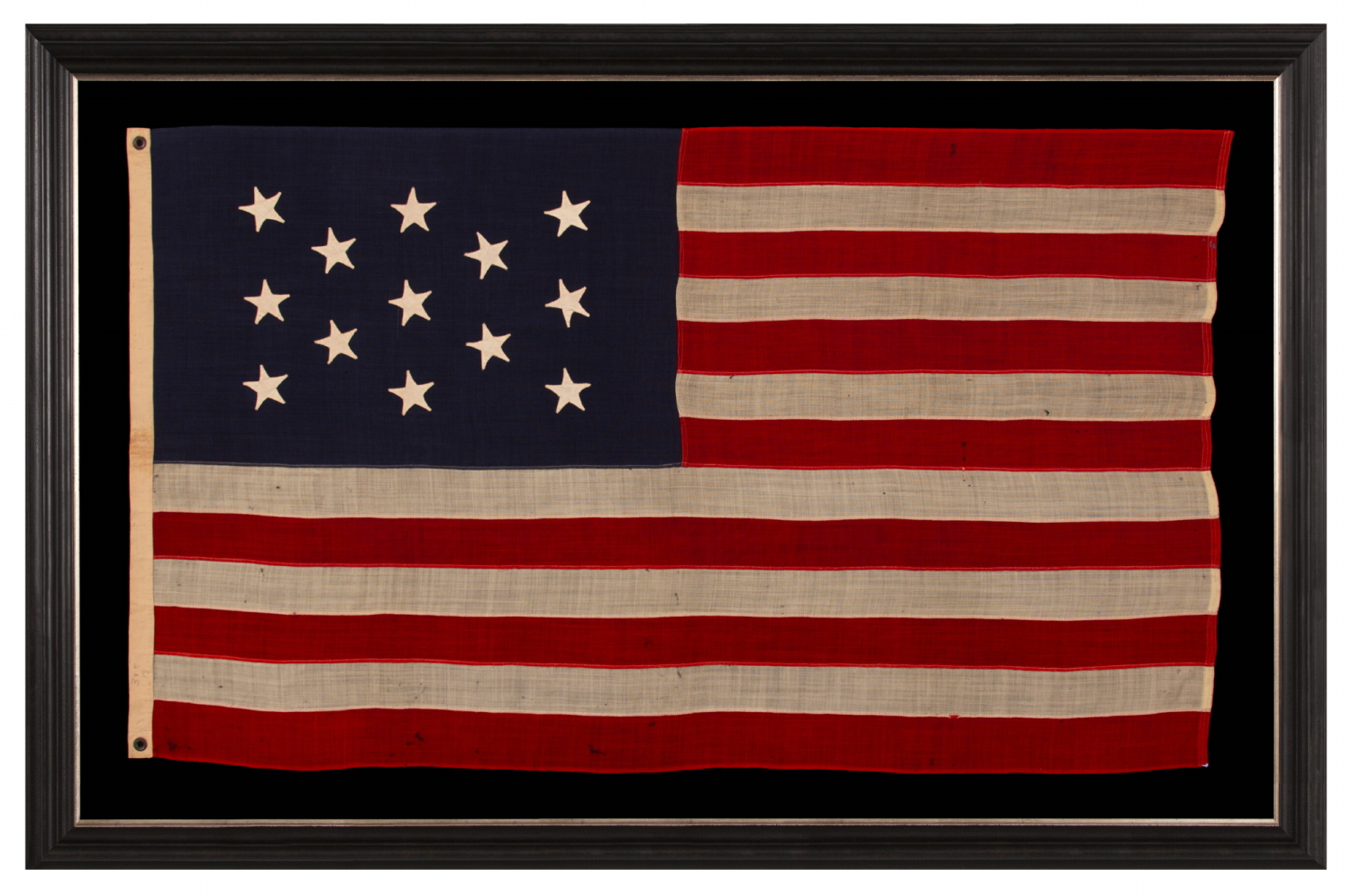
| 13 HAND-SEWN STARS IN A 3-2-3-2-3 PATTERN ON A U.S. NAVY SMALL BOAT ENSIGN OF THE CENTENNIAL ERA, MADE circa 1870-1882, IN A VARIANT OF THE SMALLEST REGULATION SIZE |
|
| Web ID: | 13j-1743 |
| Available: | In Stock |
| Frame Size (H x L): | Approx. 47" x 71" |
| Flag Size (H x L): | 35.25" x 58.75" |
| Description: | |
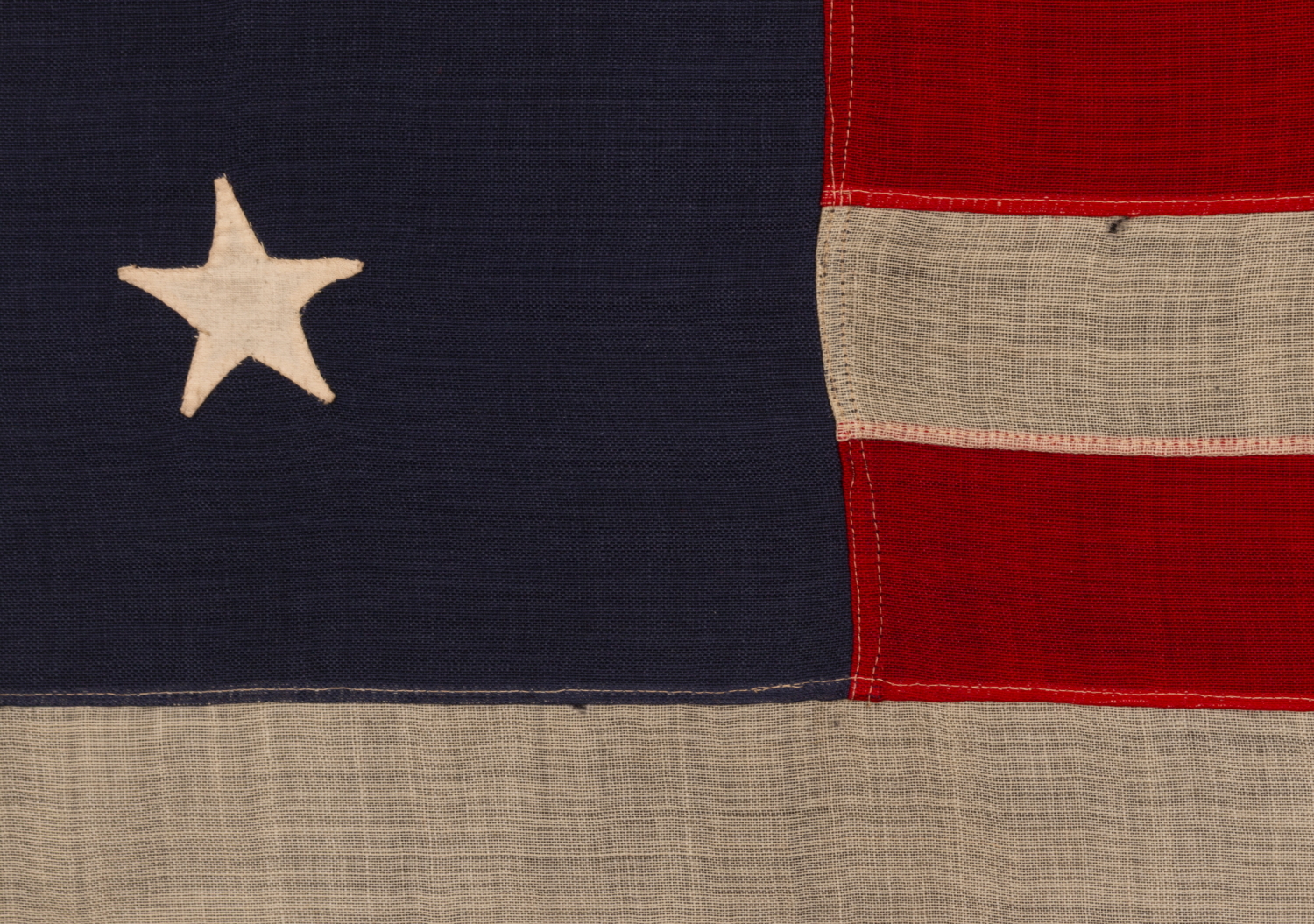
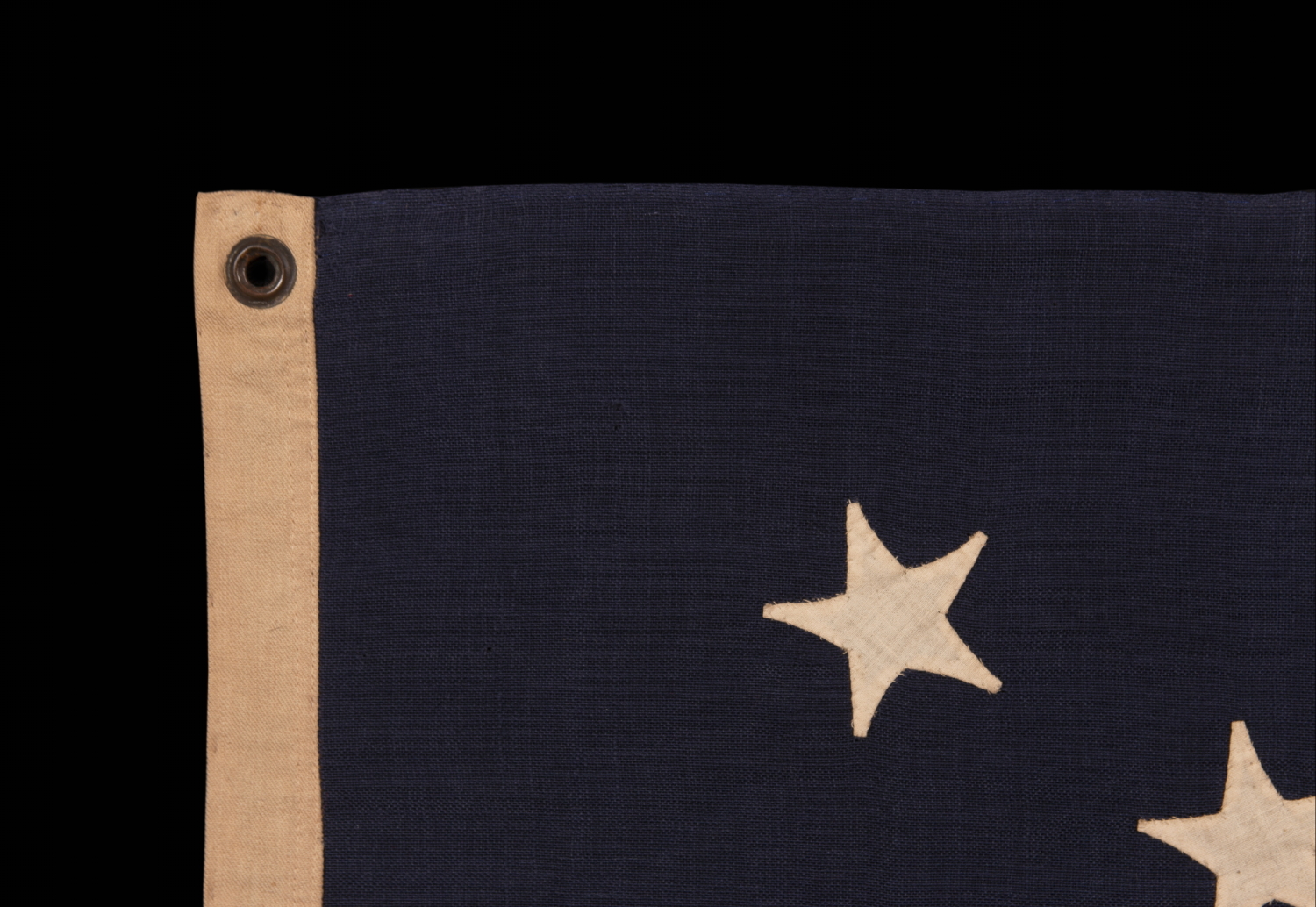
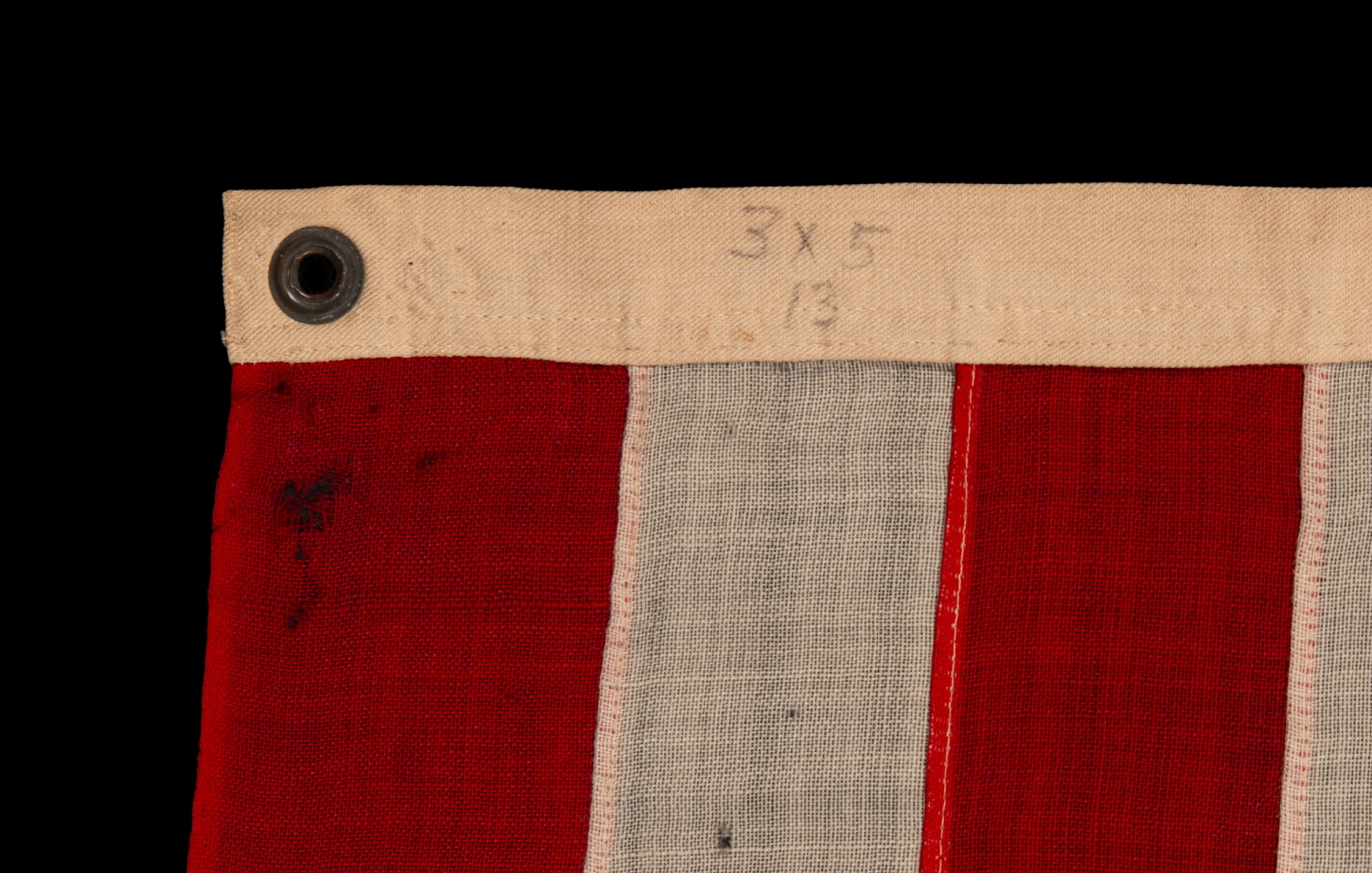
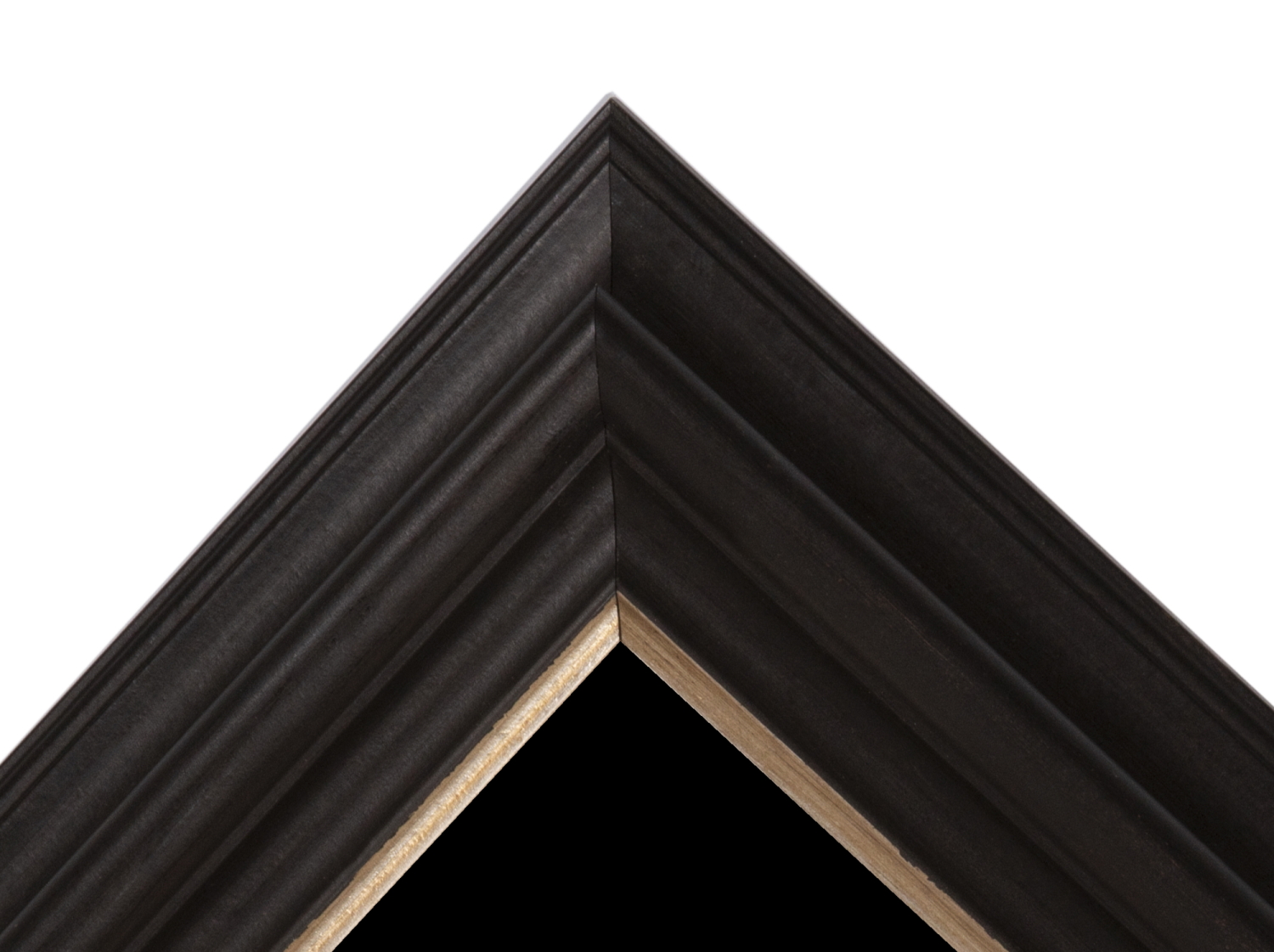
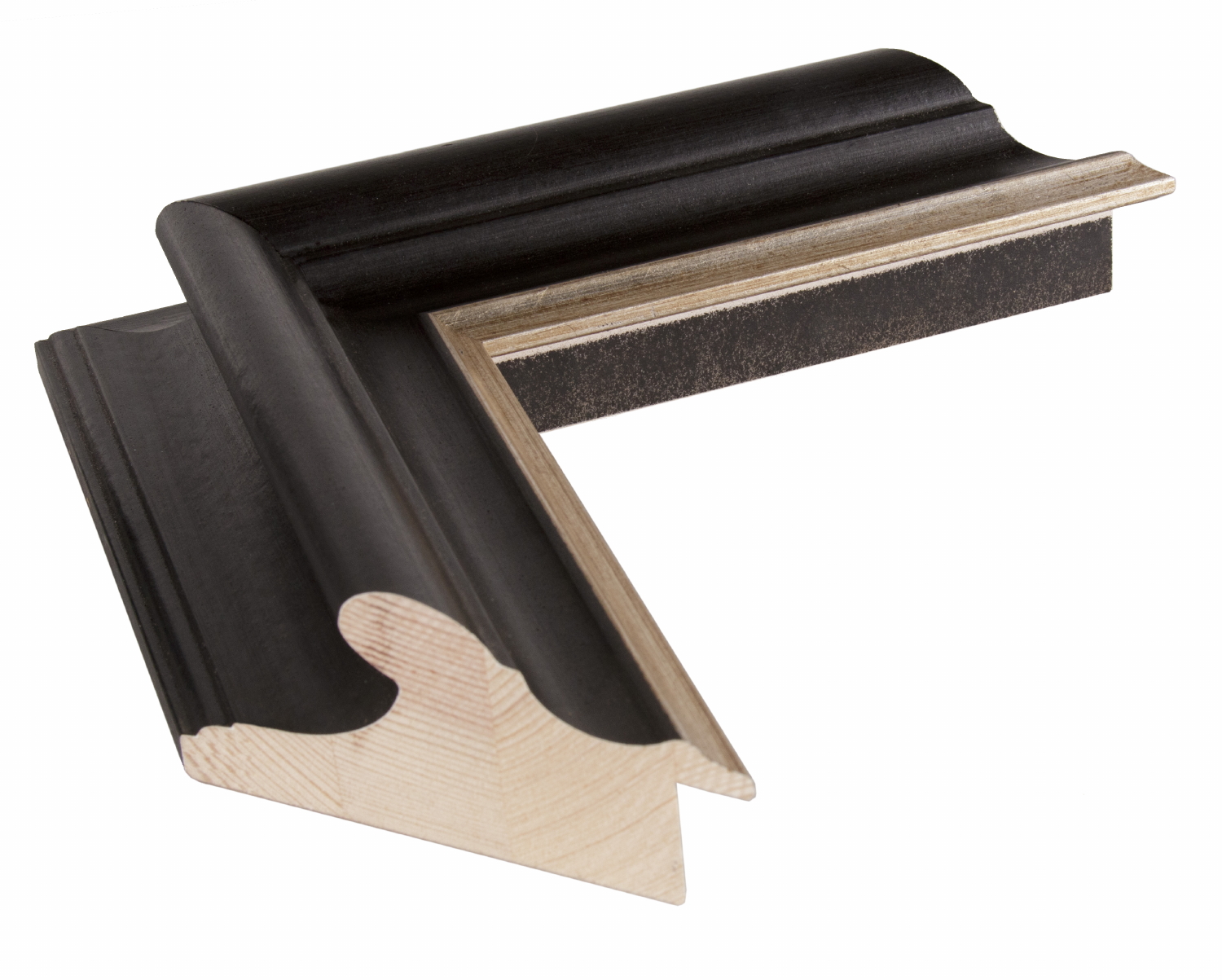
| 13 star American national flag, made in the era of the 1876 centennial of American independence. The stars are hand-sewn, made of cotton, and double-appliquéd (applied to both sides). These are arranged in lineal rows of 3-2-3-2-3. In most cases this design can also be viewed as a diamond of stars, with a star in each corner and a star in the very center, or as a combination of the crosses of St. Andrew and St. George, which some feel could have been the design of the very first American flag and may denote a link between this star configuration and the British Union Jack. The U.S. Navy flew 13 star flags not only in the Revolutionary and early Federal periods, following the First Flag Act (passed June 14th, 1777), but through much of the 19th century, particularly the second half. As the total number of states increased, and subsequently the number of stars, the Navy often utilized various counts, lower than actual, on smaller flags, to ensure that the stars themselves would be easier to discern at a distance. Primarily these “boat flags,” as termed by the Navy, or “small boat ensigns,” as they are often referred to today, displayed 13 stars to reflect the original 13 colonies. Flag experts disagree about precisely when the Navy began to employ this practice. Some feel that the use of 13 star flags didn’t really cease, perhaps experiencing a pause or a slowdown between the Second Flag Act (1794, effective Jan. 1, 1795) and the War of 1812 (1812-1815), getting legs again in the surge of colonial patriotism that followed, which persisted through the last visit and ‘Grand Tour’ of Lafayette, between 1824-25, and the nation’s 50th anniversary of independence. This seems to be supported by depictions of ships in period artwork. Less consistent prior to the Civil War, but more so afterwards, use of 13 star flags by the Navy continued until 1916, when President Woodrow Wilson wrote an Executive Order that ended the practice, in favor of small flags with the full complement of stars. The 3-2-3-2-3 pattern is often attributed--erroneously in my opinion--to New Jersey Senator Francis Hopkinson, a member of the Second Continental Congress and of the Marine Committee, and signer of the Declaration of Independence. Hopkinson is generally credited with having played the most significant role in the design of the American national flag, prior to its June 14th, 1777 adoption. He is known to have submitted a proposed sketch to congress, as a civilian, after rescinding his senatorial seat. As an enthusiast in heraldry, and an amateur artist, Hopkinson designed numerous other things in early America, including various pieces of colonial currency, and the Great Seal of the U.S. Treasury. He also submitted two proposed sketches to Congress for their consideration as the Great Seal of the United States. Although Hopkinson’s original sketch for the American flag do not survive, his depictions of 13 star arrangements on other devices do not reflect the 3-2-3-2-3 pattern falsely attributed to him. This seems to have developed from a viewer’s unsuccessful attempt to make sense of the star patterns he presented in both of his Great Seal submissions, in which they were decidedly random—likely to avoid giving precedence to any particular state, or any group thereof. Although 3-2-3-2-3 arrangements appear in the cantons of some regimental battle flags during the Revolution, these are flags with solid colored fields (buff yellow, blue, green, red, etc.), not in the form of the national flag, with a complement of 13 red and white stripes. Curiously, the 3-2-3-2-3 is almost never encountered on surviving examples of the national flag that pre-date the Civil War (1861-63). The pattern begins to appear on U.S. Navy ‘boat flags’ in the closing years of the war, between roughly 1864-65. The canton and stripes of the flag, that is the subject of this narrative, are made of wool bunting that has been pieced and hemmed by treadle stitching. There is a twill cotton binding along the hoist with 2 brass grommets. The fabric and the construction of the flag, the size of the stars, their configuration, and the precise, overall appearance of all of the above, is indicative of Navy construction in the era of the 1876 centennial of American independence, between approximately 1870 and 1882. U.S. Navy regulations of 1870, effective until updated in 1882, specified small boat ensigns in 5 different sizes, the smallest of which was 2.5 feet on the hoist by 5 on the fly, designated as a “No. 14.” At approx. 3 feet on the hoist by just a hair under 5 feet, this particular flag was likely produced to fulfill the No. 14 specs. The Navy made its own flags, many times in house, often subcontracted to wives, sisters, and mothers of seamen. Though the simple fact of being hand-made certainly lent to irregularity, sizes were known to vary from Navy specs, which probably took into account such things as length of a ship vs. an ideal sized signal, though perhaps failed to address the most efficient use of fabrics, for example, given the available widths in which they came off the loom, or the differences between two ships of the same length, given attributes that might interfere with flying a flag of a certain proportions. Making one longer and skinnier, might allow it to avoid physical obstacles, while achieving the desired overall ‘footprint,’ in terms of square feet. Slight alteration of measurements might likewise afford the most sensible use of 18” width bunting, for example, if that were the only size available. In 19th century flag-making, matters of practicality, when applicable, appear to have always outweighed official doctrine. More Information on 13 Star Flags in Early America In addition to their use on U.S. Navy ships, some private ships flew 13 star examples throughout the 19th century. 13 star flags were hoisted at all manner of patriotic events, including Lafayette’s return visit and tour of America in 1824-25, the 1876 centennial of American independence, and celebrations of Independence Day. They were displayed during the Civil War, to reference past struggles for American liberty, and were used by 19th century politicians in political campaigning for the same reason. The use of yachting ensigns with a wreath of 13 stars, surrounding a fouled anchor, which allowed pleasure boats to bypass customs between 1848 and 1980, persists today without an official purpose. Because any American flag that has previously been official remains so according to the flag acts, it remains perfectly acceptable to fly 13 star flags today by way of congressional law. Throughout history, and even today, they are boldly displayed at every presidential inauguration. Mounting: The flag was mounted and framed in-house. For 25 years we have maintained our own specialized department for this purpose, led by expert staff. We take great care in the mounting and preservation of flags and related textiles, and have preserved thousands of examples. The black-painted molding, with its wide, shaped profile and gilded inner lip, is Italian. The background is 100% cotton twill, black in color, that has been washed and treated for colorfastness. The glazing is U.V. protective acrylic (Plexiglas). Feel free to contact us for more details. |
|
| Video: | |
| Collector Level: | Intermediate-Level Collectors and Special Gifts |
| Flag Type: | Sewn flag |
| Star Count: | 13 |
| Earliest Date of Origin: | 1870 |
| Latest Date of Origin: | 1882 |
| State/Affiliation: | 13 Original Colonies |
| War Association: | |
| Price: | Please call (717) 676-0545 or (717) 502-1281 |
| E-mail: | info@jeffbridgman.com |
 |
|